Events
Bonfire Night is the one evening of the year when the whole country stands outside in the cold, next to a fire, eating. It is, in other words, a Game and Flames event with the fireworks thrown in. And yet most people feed it with a tray of sausages from the oven and a jacket potato wrapped in foil.
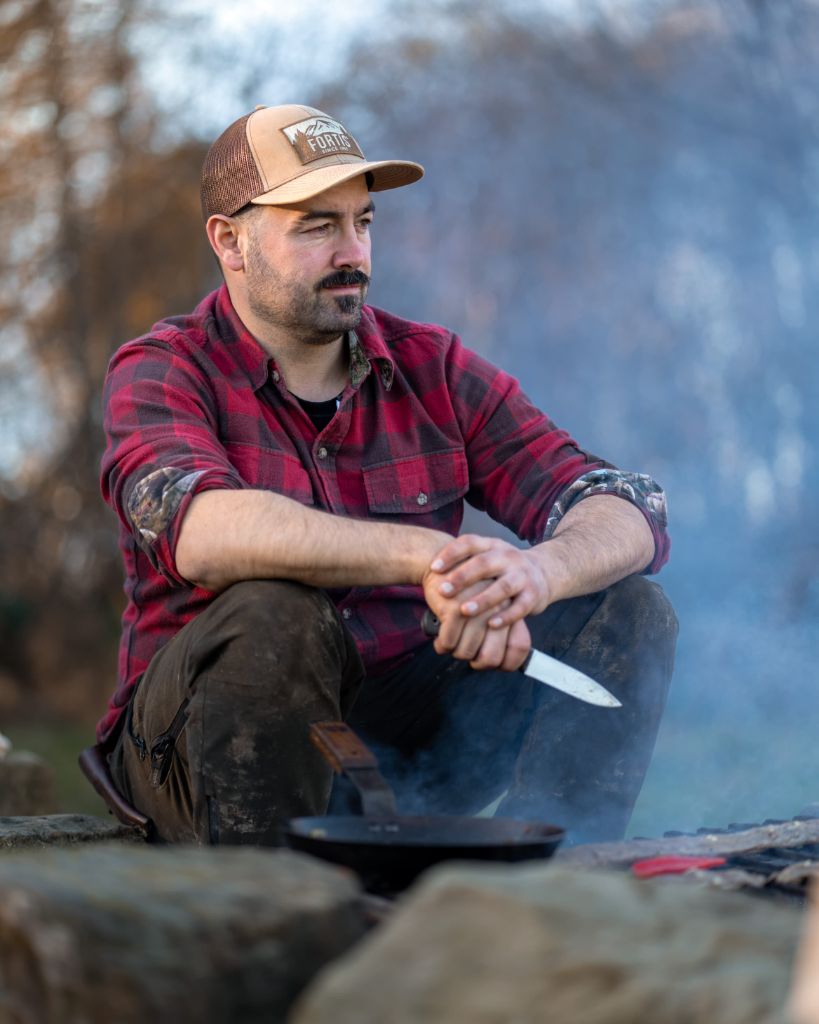
I have cooked for village bonfire nights with two hundred people and for my own family in the garden. The principle is the same at both sizes: you already have a fire, so use it. Here is what I put on it.
The bonfire is not the cooking fire. A bonfire is a pile of pallets and garden waste burning hot and fast, and it is full of things you do not want anywhere near food. Build a second, smaller fire of proper hardwood a safe distance away, light it an hour before anyone arrives, and let it burn down to a bed of embers. That is your kitchen. If you want to know which wood, I have written it down.
A grill grate over half of it and bare embers on the other half gives you everything below.
Keep the sausages, because Bonfire Night without them is wrong. Just make them good ones. Venison and pork from a butcher, thick, with real casings. Cook them slowly at the cooler end of the grill, turning often, for twenty minutes or so, until the skins are tight and blistered and the inside is cooked through. Rushing them over the hot end splits the skins and leaves the middle raw, which is how most Bonfire Night sausages end up.
Serve them in soft rolls with onions that have been cooking in a pan on the edge of the fire since the sausages went on, and a pot of English mustard. That is the whole thing. Nobody has ever wanted more from a Bonfire Night sausage than this.
A jacket potato wrapped in foil and buried in a bonfire comes out either raw or a lump of charcoal, because a bonfire has no steady heat. In a proper ember bed it is a different story. Prick large potatoes, rub them with oil and salt, and bury them directly in the embers with no foil at all. Forty-five minutes to an hour, turned once. The skin goes black and crisp, the inside is fluffy and smoky, and you scrape the burnt bits off before you split it. Butter, salt, and a spoon of whatever is in the pot below.
One big cast iron pot at the edge of the fire, started in the afternoon, feeds a crowd without anyone having to stand at the grill. Options that work:
Bonfire Night is eaten standing up, so anything on a skewer wins. Chicken thigh on a stick, cooked over the hot end until the edges catch. Halloumi and pepper skewers for the ones not eating meat. Chunks of pork belly that have been in the slow pot, finished on the grill for a crust. Hand them straight from the fire to the queue.
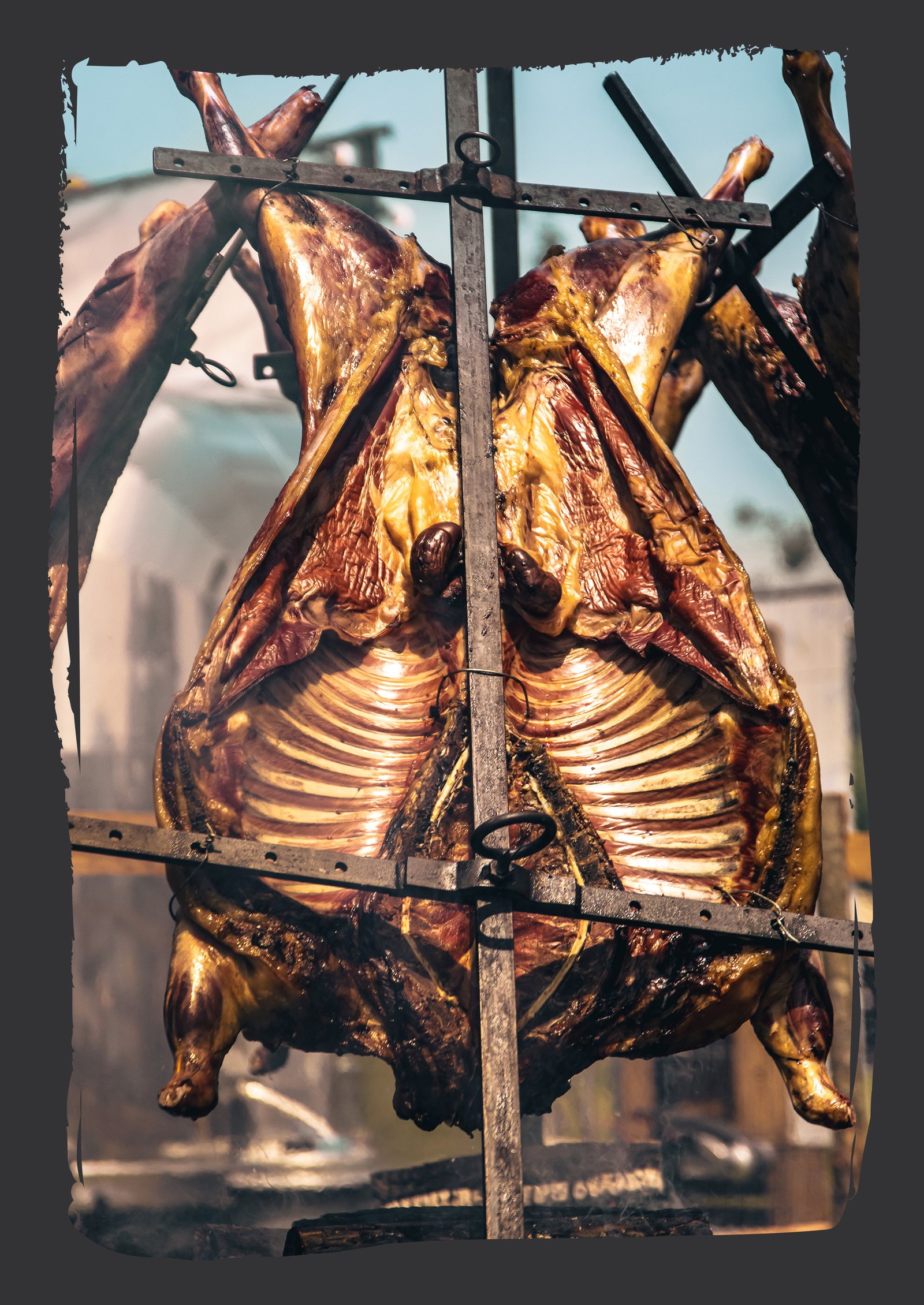
At a village bonfire a few years ago we cooked three hundred venison sausages and two whole pork shoulders on a fire we built in the car park. The fireworks were fine. People still talk about the sausages.
- Cai
Toffee apples are tradition and I will not argue with tradition, but a roasted apple is better. Core a Bramley, fill the hole with brown sugar, butter and a pinch of cinnamon, wrap it loosely in foil this time, and sit it at the edge of the embers for twenty minutes. Eat it from the foil with a spoon and some cold cream. If there are children, marshmallows on sticks, obviously, and a bar of dark chocolate to press them against.
Mulled cider in a pot on the edge of the fire, kept just below a simmer. Hot chocolate for the children in the same way. The fire does the keeping warm, which is the thing a kitchen kettle cannot do.
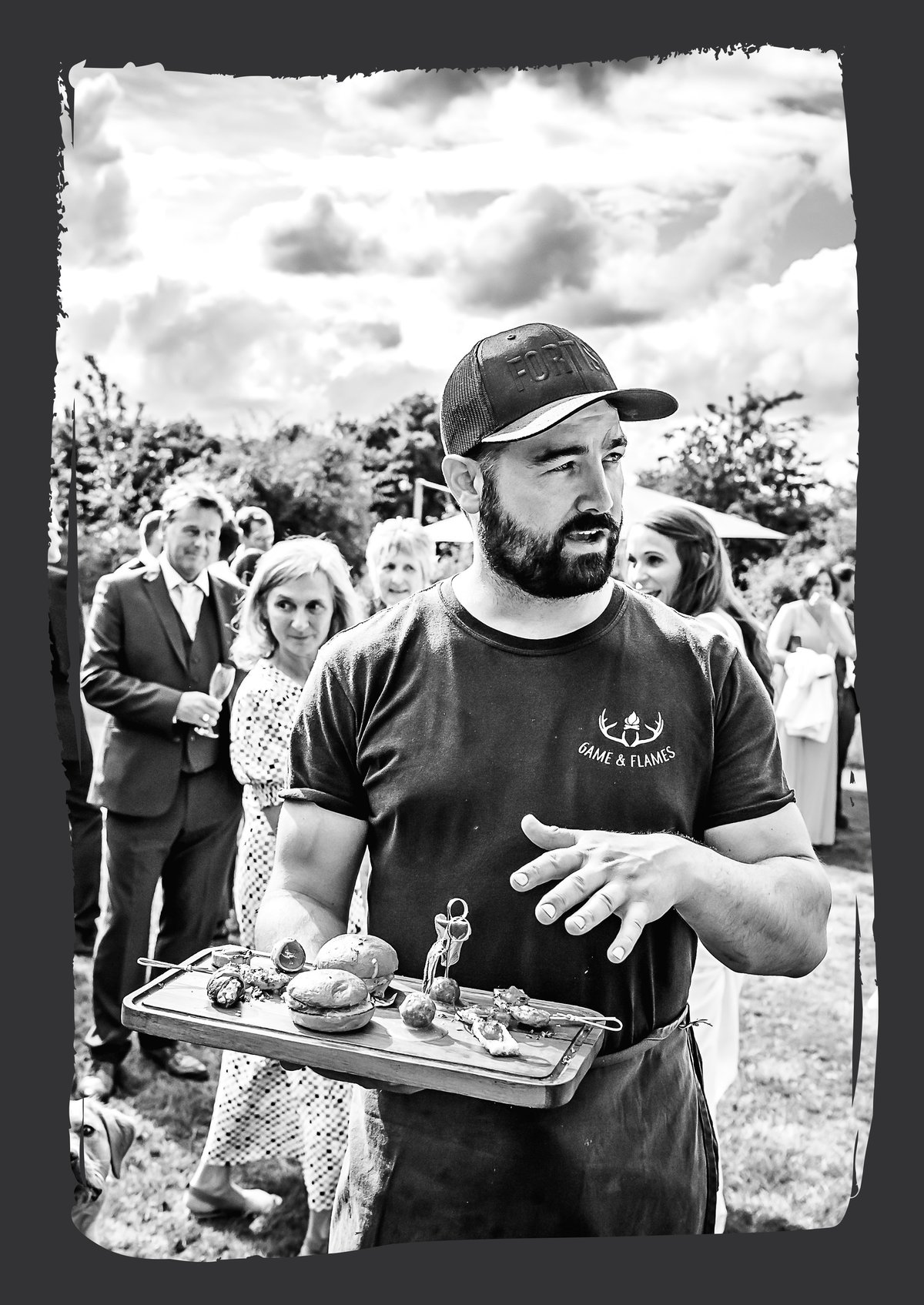
We do Bonfire Night. Village events, private parties, a farm with a few hundred people. We bring the cooking fire, the pots and the sausages, and you worry about the fireworks. The first weekend of November goes quickly, so talk to me early. And if you want to learn to do all of the above yourself, a winter workshop covers most of it.