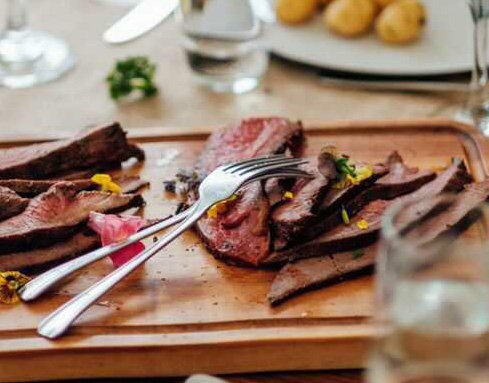
I cook meat for a living, and the dish people ask me about most often after a wedding is the cabbage. A whole hispi, cut in half, charred until it is black on the outside, dressed with smoked butter. It costs about sixty pence and it outshines the venison.
Fire does something to vegetables that no oven can. The heat is fierce and dry, so sugars caramelise on the outside while the inside steams in its own moisture. Smoke gets into everything. And the method is often no method at all: you put the vegetable in the fire and take it out later.
This is what I cook, and how, from the easiest to the ones that need a bit of care.
Straight Into the Embers
These go into the coals whole, skin on, no oil, no foil, no tray. The outside burns. The inside is perfect. You scrape or peel the burnt layer off and eat what is underneath.
- Onions: Whole, skin on, buried in the embers for 40 to 50 minutes until they give when squeezed. Peel the black outer layers away and you have a sweet, soft, smoky onion. Split it, salt it, a drizzle of good vinegar. Astonishing for what it is
- Beetroot: The same, an hour or more for large ones. The skin slips off. Slice and dress with horseradish and something creamy
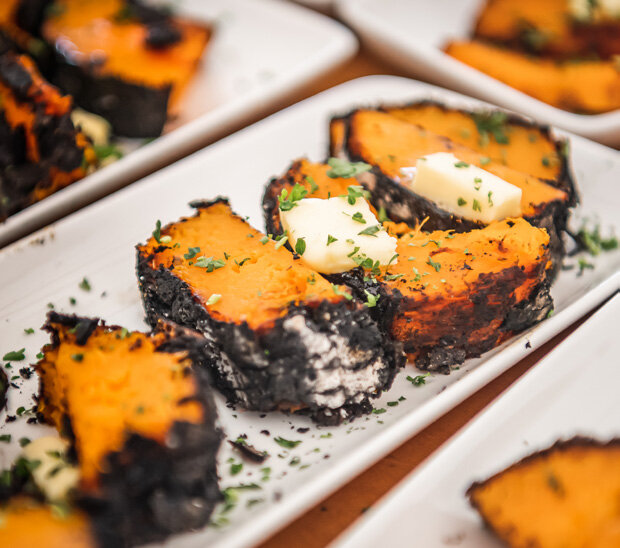
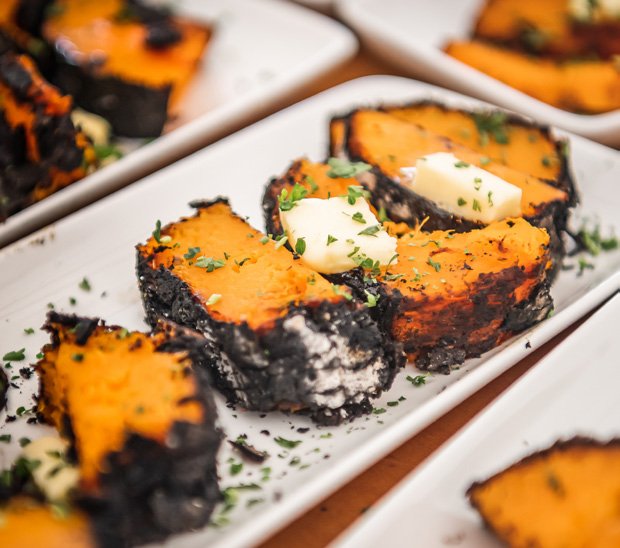
- Sweet potatoes and celeriac: An hour. Split open, butter, salt. Done
- Leeks: Whole, laid on the coals for 15 minutes a side until completely black. Peel off the charred outer leaves. The inside is silky. Romesco alongside if you are feeling Catalan
- Aubergine: 20 minutes turning until it collapses. Scoop the flesh out, mash it with garlic, lemon, tahini and oil. The best baba ganoush is made this way and no other
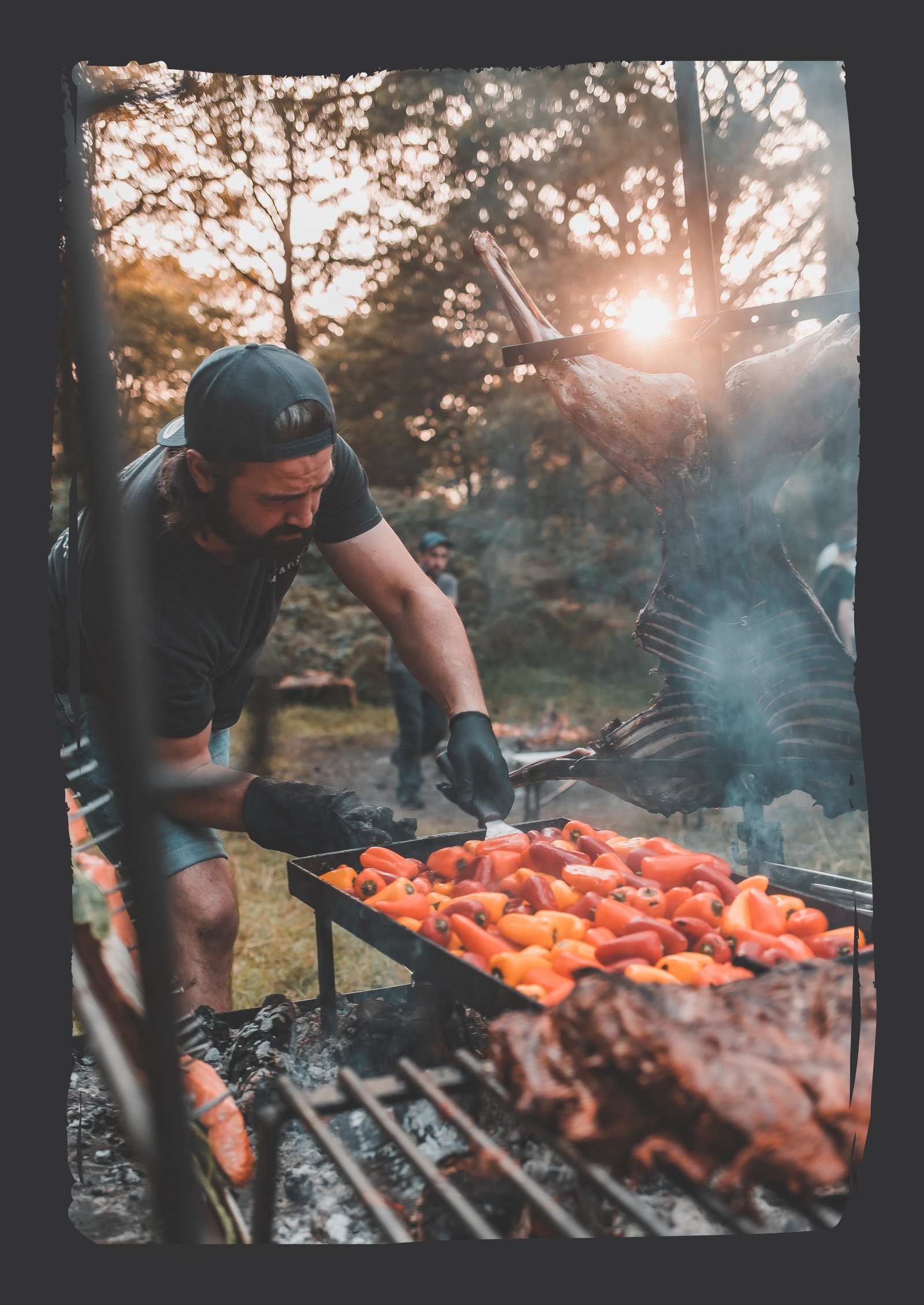
- Peppers: Blistered black all over in about ten minutes, then into a covered bowl to steam. The skin comes off in sheets
On the Grill, Hard and Fast
Over the hot end of the fire on a grate, cut side down, left alone until they are darker than you think they should be.
- Hispi cabbage: The star. Quartered through the root so it holds together, brushed with oil, salted, and put cut side down over hot embers until deeply charred, six or seven minutes a side. Then moved to the cool zone for ten minutes to soften through. Dressed with brown butter, or a miso butter, or just more salt and lemon
- Broccoli and cauliflower: In thick steaks or big florets, same treatment. Charred edges, tender stems. A dressing of anchovy and chilli if there are no vegetarians, capers and lemon if there are
- Spring onions and asparagus: Two minutes. Char, salt, done. Piled next to a steak
- Corn: In the husk over the coals for 15 minutes, then husk off and back on the grill for the char. Lime, chilli, salt
- Mushrooms: Big flat ones or a whole cluster of oyster mushrooms, brushed with oil, cooked hot until the edges crisp. They take smoke like nothing else
In a Pan on the Fire
Some things want a heavy pan set on the grate or directly in the coals. Cast iron, always.
- Potatoes: Parboiled, then into a pan of duck fat or beef dripping on the edge of the fire until the outsides shatter. Or new potatoes with a lot of butter, a lid, and half an hour
- Greens: Chard, kale, cavolo nero, wilted in a pan with garlic and oil in the last minute before serving
- Beans: A pot of white beans with tomato and rosemary, left to bubble at the cool edge of the fire for as long as you like. A vegetarian main in its own right
Every wedding menu I write has more vegetables on it than the couple expected, and every wedding I have never had any left over. Guests come to the boards for the venison and go back for the cabbage. That is not an accident. Fire makes vegetables taste like the best version of themselves.
- Cai
Making It a Meal
For vegetarian and vegan guests at our events, the fire-roasted vegetables are not what is left after the meat. They are the main event, built into a plate on purpose: a whole roasted squash split and filled with a grain and herb salad, ember-baked celeriac carved at the table like a joint, charred hispi with a smoked almond dressing. I have written more about how we feed everyone at a fire feast.
And for the meat eaters, these are what make the plate. A slice of ember-cooked steak next to a whole burnt onion and a pile of charred greens is a better dinner than the steak on its own, and it costs almost nothing more.
If you want to learn to cook this way, vegetables are the first thing we put in the fire at a workshop, because they are the fastest way to understand what embers do.
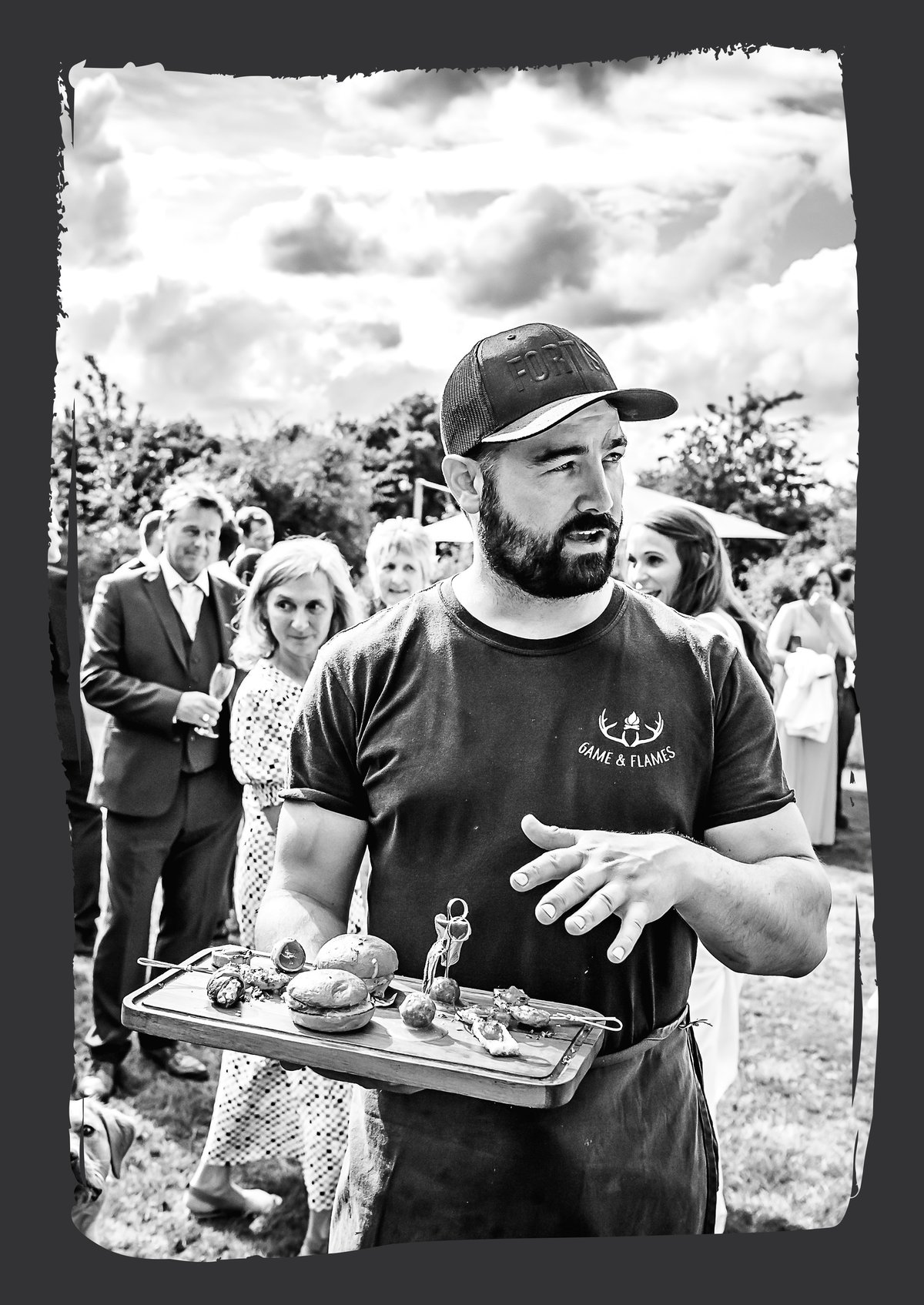
Founder & Head Chef
Cai Ap Bryn
Eat Game Awards 2024 and 2025 Winner, PDS 1 & 2 qualified deer stalker, and the fire behind Game and Flames. Cai has been cooking wild game over open flames since 2016, catering weddings, events, and festivals across the UK.