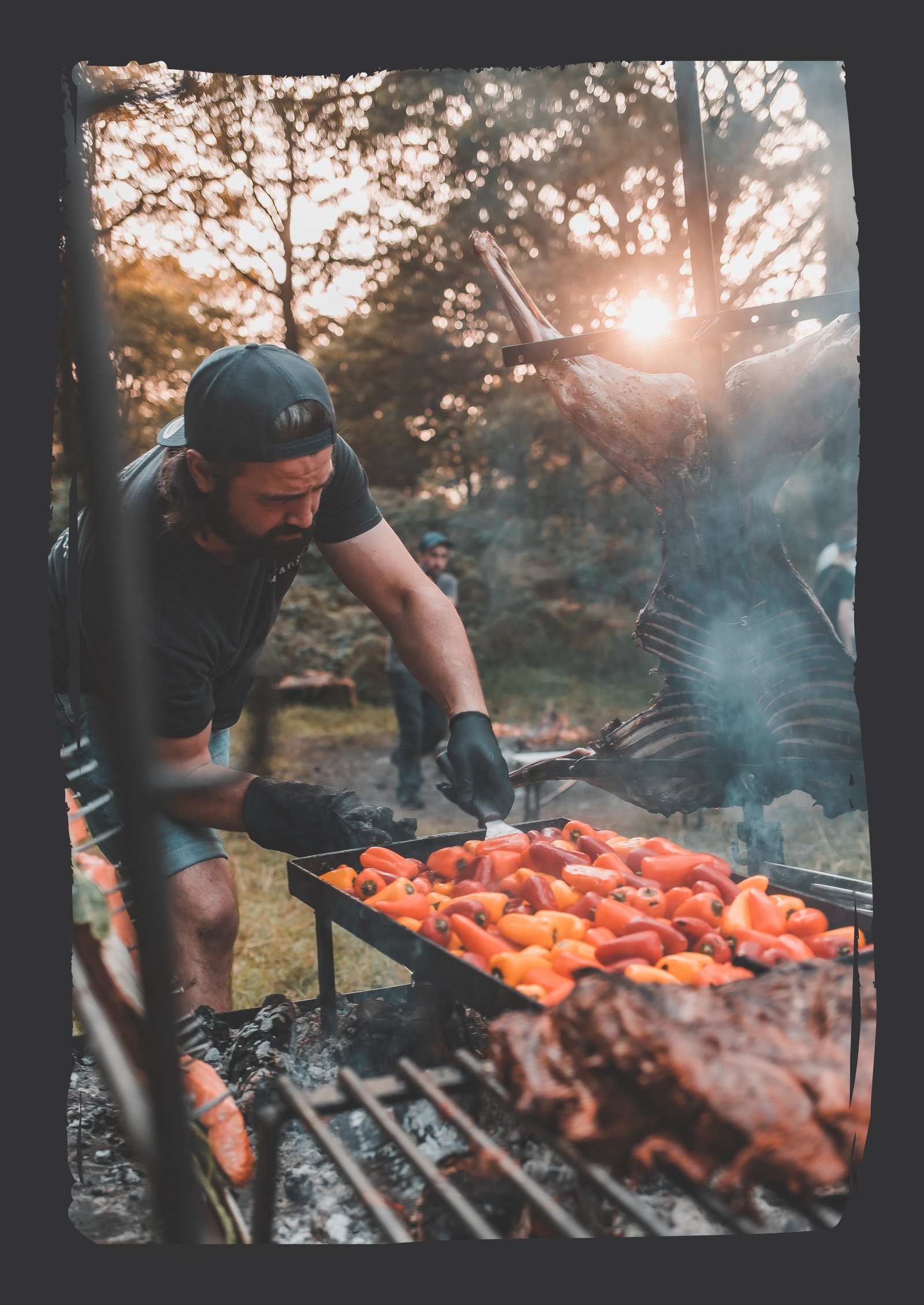
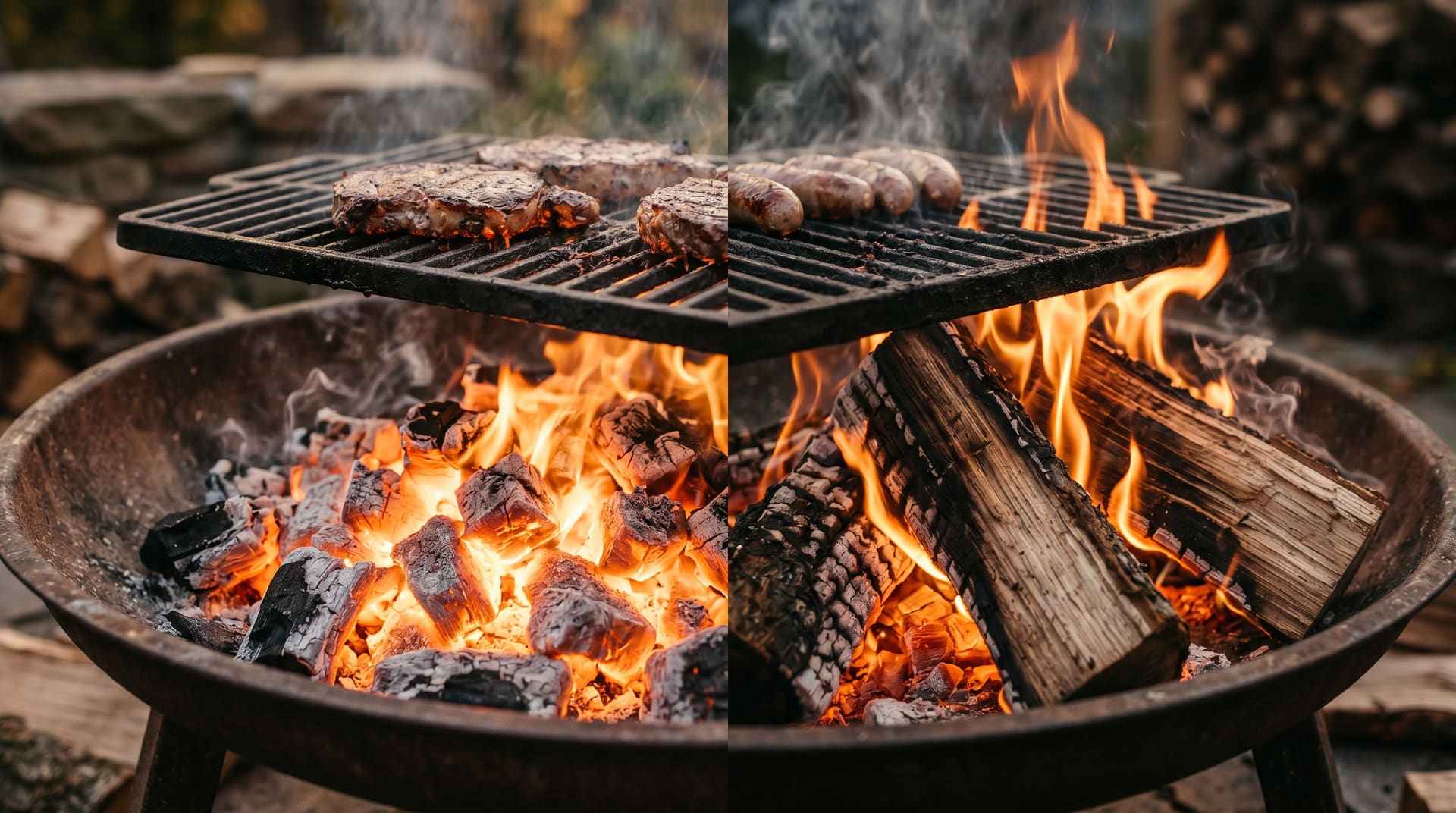
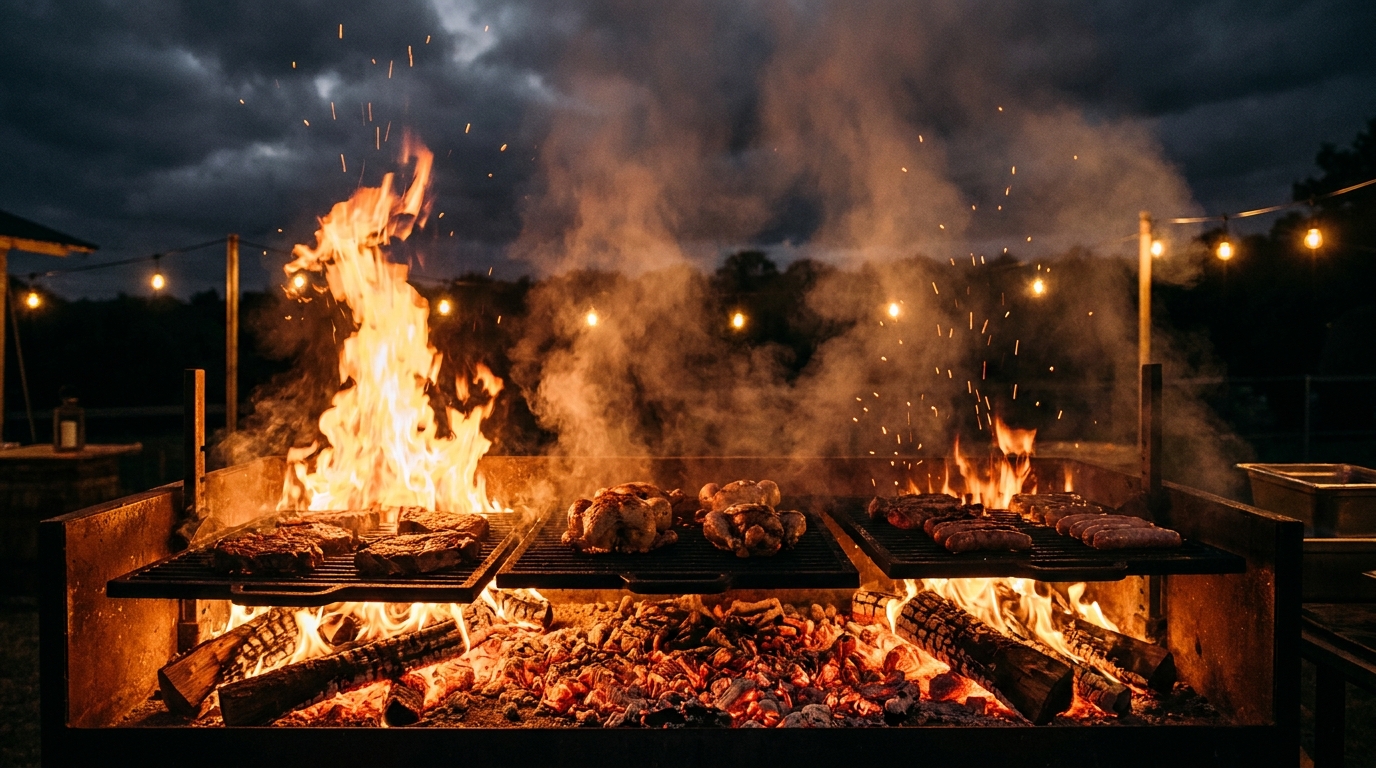
People ask me what wood I cook with as if there is one answer. There is not. There is a woodpile at every event with three or four different timbers in it, and which one goes on the fire depends on what is cooking, how long it needs, and what stage the fire is at.
I have written before about charcoal versus wood. This is the next question: which wood.
The Only Rule That Really Matters
Hardwood, seasoned, untreated. Everything else is detail.
Hardwood means the dense, slow-growing broadleaf trees: oak, ash, beech, birch, hornbeam, the fruit trees. They burn slowly, they burn hot, and they burn down to embers that hold their heat for hours. Softwoods, the pines and firs and spruces, burn fast, spit, and produce a resinous smoke that tastes of turpentine.
Seasoned means dried, ideally for eighteen months to two years, to under 20 per cent moisture. Green wood hisses, smoulders, and puts out an acrid smoke that coats food in creosote. A moisture meter costs about fifteen pounds and is worth every penny if you are buying logs.
Untreated means it has never been painted, stained, pressure-treated, glued or made into a pallet. Treated timber releases chemicals when it burns that you do not want near food or lungs. If you do not know where the wood came from, do not cook over it.
The Woods I Use
- Oak: The backbone of every fire I build. Dense, long-burning, produces a deep bed of embers and a medium, savoury smoke that suits red meat, venison and lamb without overwhelming them. If I could only have one wood, this is it
- Ash: Lights easily, burns clean and hot, mild smoke. Excellent for getting a fire going and for the fast, hot cooking. Burns faster than oak so it needs topping up more often
- Beech: Very similar to oak in burn, slightly sweeter and lighter in smoke. Good with pork and poultry. Mixes beautifully with oak
- Birch: Burns fast and bright with a slightly sweet smoke. Good kindling and a good fire-starter, less good as the main fuel because it does not last
- Apple, pear, cherry, plum: The fruit woods. Sweet, delicate smoke, gentle burn. Superb with pork, chicken, duck and fish, where oak would be too much. Hard to get in quantity, so I use them as a flavour log on top of an oak base rather than as the whole fire
- Hornbeam: The hottest-burning native hardwood, if you can find it. Excellent for a long roast
- Alder: The traditional wood for smoking fish, and a lovely light smoke on trout and salmon
Matching Wood to Food
This is where it gets interesting, and where a bit of thought makes a real difference to the plate.
- Venison, beef, lamb: Oak. The strong meat wants a strong smoke. A whole haunch over oak for four hours is what this whole business is built on
- Pork: Oak base with apple or cherry on top. Pork loves sweet smoke
- Chicken, duck, game birds: Beech or fruitwood. Oak alone can be too heavy on a delicate bird
- Fish: Alder or fruitwood, and not much of it. Fish takes smoke fast and easily goes too far
- Vegetables: Anything. Vegetables buried in embers do not much care what the embers were
- Bread: A clean-burning wood with no flavour to speak of. Ash is perfect
The fire at a wedding is usually three woods at once. Oak for the ember bed that lasts all day, ash to bring it up fast when I need heat, and a log of apple thrown on when the pork goes over. Guests see one fire. I see three tools.
- Cai
The Woods to Never Burn
Some of these are dangerous. All of them will ruin your dinner.
- Any softwood: pine, spruce, fir, cedar, larch. Resin, spitting, foul smoke
- Treated, painted, or glued timber: decking, fence panels, pallets, MDF, plywood, old furniture. Toxic when burnt
- Driftwood: full of salt, which releases chlorine compounds as it burns
- Laburnum, yew, and oleander: genuinely poisonous. Yew in particular is common in gardens and should never go on a cooking fire
- Elder: traditionally avoided, and for good reason; the smoke is unpleasant and the green wood contains compounds you do not want
- Green wood of any kind: not dangerous, but smoky, sulky and ruinous to flavour
Where to Get It
Buy from a proper firewood supplier who can tell you the species and the moisture content, and who sells by the cubic metre rather than in bags at a petrol station. Look for the Ready to Burn mark in England. A tree surgeon is often a good source of cheap, mixed hardwood, but you will need to season it yourself, which means a year in a dry, airy stack.
If you want to see and smell the difference between the woods for yourself, it is one of the first things we go through at a fire cooking workshop. Nobody leaves thinking wood is just wood.
Founder & Head Chef
Cai Ap Bryn
Eat Game Awards 2024 and 2025 Winner, PDS 1 & 2 qualified deer stalker, and the fire behind Game and Flames. Cai has been cooking wild game over open flames since 2016, catering weddings, events, and festivals across the UK.