Recipes
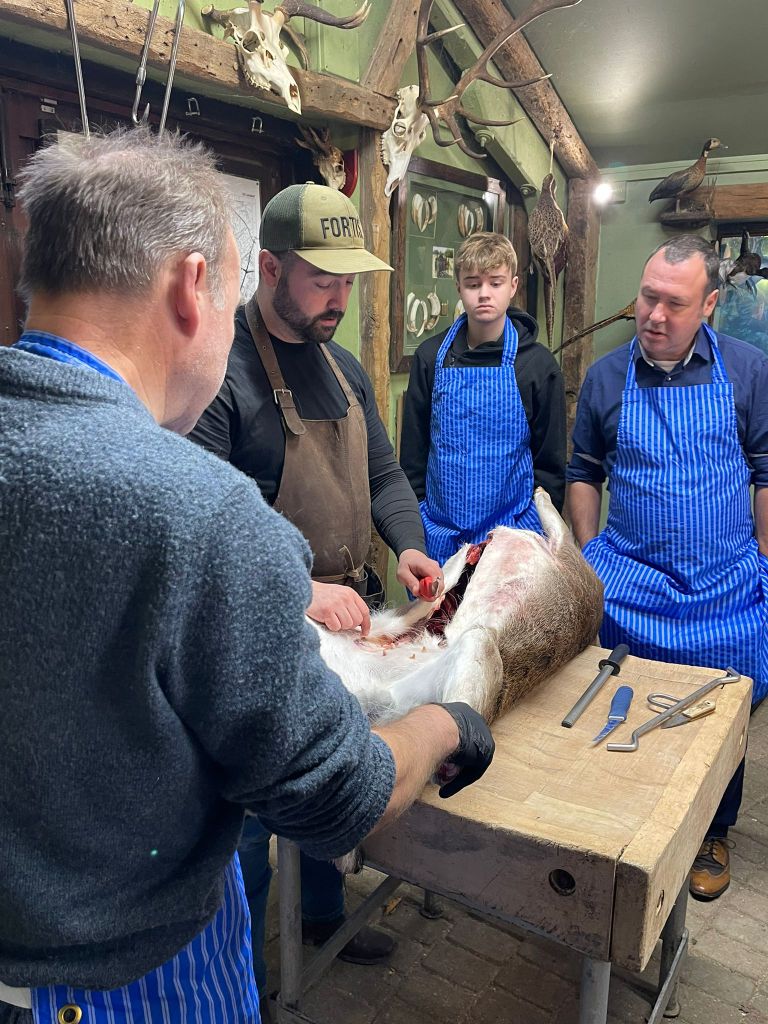
The loin gets all the attention, but most of a deer is not loin. It is shoulder, neck and shin: hard-working muscle, full of connective tissue, and full of flavour. Cook those cuts fast and they are tough. Cook them slowly and they turn into the best stew you will eat all winter. When we break down a whole deer, this is where a good half of it goes.
This is the stew I make at home and the one we cook in big pots on the edge of the fire at winter events. It takes ten minutes of chopping and three hours of leaving alone.
Use shoulder, neck or shin, or a mix. Ask for diced venison for stewing, or buy a piece of shoulder and cut it into large chunks yourself, about the size of a golf ball. Do not use loin or haunch steaks: they are too lean and too expensive, and they go dry and stringy in a stew. The tough cuts are tough because of the connective tissue, and that tissue is exactly what melts into a rich, glossy sauce after a few hours.
For six:
This step is where most stews go wrong. Toss the venison in the seasoned flour and brown it in a heavy casserole in small batches, over a high heat, with a little oil. If you crowd the pot the meat steams and goes grey instead of brown, and you lose half the flavour. Each batch wants a dark crust. It takes fifteen minutes and it is worth every one of them.
Lift the meat out, fry the bacon in the same pot, then add the onions, carrots and celery and cook them for ten minutes until soft. Stir in the garlic and tomato puree for a minute, pour in the wine and scrape up every brown bit from the bottom. Let it bubble for a couple of minutes, then put the venison back in with the stock, juniper, bay and thyme.
In the oven: lid on, 150C, for three to three and a half hours. Check it after two hours and add a splash of water if it looks dry.
Over the fire: a cast-iron Dutch oven with a lid, set at the edge of the fire on a bed of embers rather than over the flames, with a few embers shovelled onto the lid. You want a gentle simmer, not a boil. Top the embers up every half hour or so. Hardwood like oak or ash gives long, even embers; there is more on choosing wood in which wood to cook with. The stew picks up a gentle smokiness that you will not get indoors.
In a slow cooker: do the browning in a pan first, then eight hours on low.
It is ready when a piece of meat falls apart when you press it with a spoon. Add the mushrooms for the last half hour if you are using them, then stir in the redcurrant jelly and taste for salt.
If your stew is tough, it is not overcooked. It is undercooked. Give it another half hour and test again. Tough cuts get tougher before they suddenly give up.
- Cai
Like every stew, this improves overnight in the fridge. Make it the day before, reheat it gently until it is piping hot all the way through, and it will taste better than it did fresh. It freezes well for up to three months, which makes it a very good thing to have in the freezer for the weeks after Christmas.
If you want to know what happens to the rest of the animal, I wrote about it in nose-to-tail venison. And if you would like to learn to break down a deer yourself, that is exactly what we do on our butchery workshops.