Recipes
On the first of October the pheasant season opens, and for the next four months there is more cheap, wild, free-range meat available in this country than at any other time of year. A brace of pheasants from a game dealer costs less than a supermarket chicken. And most of them will be ruined.
The problem is that pheasant looks like a chicken, so people cook it like one. A whole bird in the oven for an hour and a half. What comes out is a breast like cardboard and legs that are still tough, because a pheasant is a lean, athletic wild bird with almost no fat, and its breast and legs want completely different cooking.
Over a fire, you can give them exactly that. This is how.
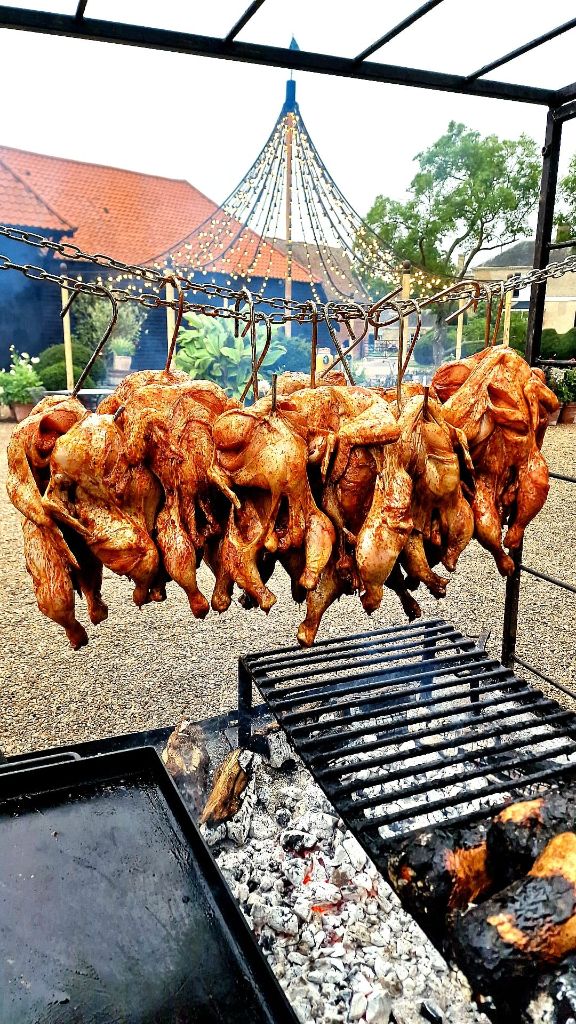
If you want the whole bird on the fire, take the backbone out and flatten it, as I describe for chicken. Then lay strips of streaky bacon over the breast. This is not decoration. Pheasant has no fat of its own, and the bacon bastes it as it cooks.
The legs will be a little undercooked at this point, which is honest: they always are when a pheasant is roasted whole. Either accept it and pull the leg meat for a stew tomorrow, or cook the parts separately, which is what I do at events.
Pheasant breast over a fire is a three-minute job, and it is the best way to eat the bird.
Pink in the middle, like a good duck breast. If you have been told pheasant must be cooked through, you have been told wrong; it is a wild bird in excellent health and it is cooked at 65C like any other poultry. Overcooking it is the mistake, not undercooking.
Pheasant legs are full of sinew and will never be tender from a quick cook. They want an hour and a half in a covered cast iron pot at the cool edge of the fire, with a glass of cider, a few juniper berries, some thyme and a halved onion. Then take the lid off and let the fire reduce the liquid to a glaze for the last twenty minutes. The meat pulls off the bone.
At a wedding I will serve the pink breast and the slow leg on the same board, and guests assume they are two different birds.
The single thing that would improve British pheasant cookery overnight is a probe thermometer. Sixty-two degrees. Not a minute per gram, not until the juices run clear, not an hour at 180. Sixty-two degrees and out.
- Cai
Pheasant is mild, so it wants things with a bit of sweetness and a bit of bitterness. Ember-roasted celeriac. Braised red cabbage with apple. A bread sauce if you are feeling traditional, which I usually am. Game chips, which are just very thin crisps fried in dripping. Blackberries or sloes in the sauce from the legs.
To drink, a lighter red. I have written about what goes with fire-cooked game, and pheasant is the bird that gives you the most choice.
Any game dealer, most good butchers from October, and increasingly the better farm shops. Ask for young birds, ask how long they have hung, and ask whether they have been plucked or skinned. A plucked bird with its skin on is worth paying more for. If you want to go further than that, my beginners guide to stalking is where the self-sufficient path starts, and we cook pheasant at every autumn workshop.