Recipes
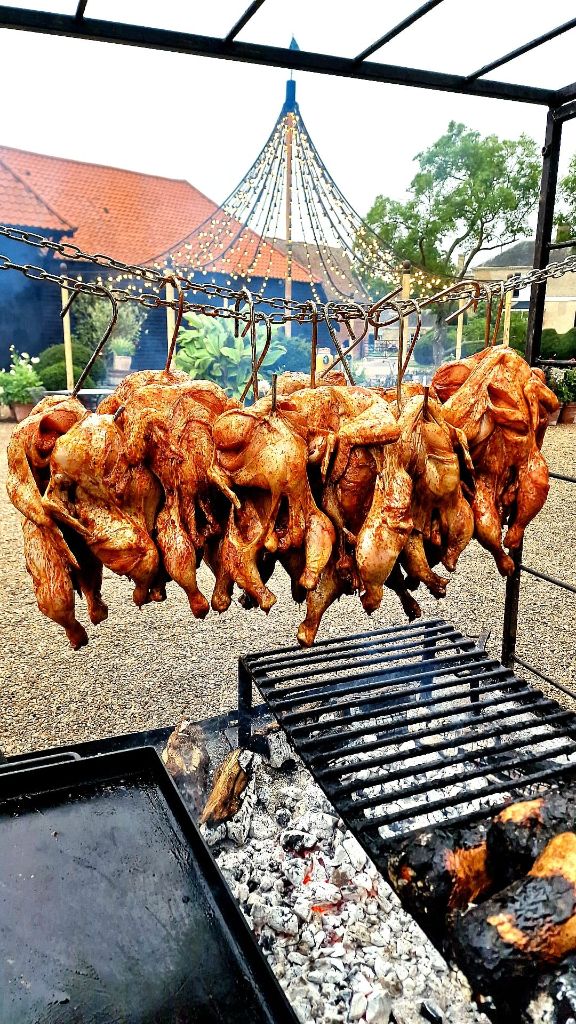
Chicken is the most-cooked meat in Britain and the most commonly ruined over fire. The reason is geometry. A whole bird is a lumpy, uneven thing: the breast is thick and lean and sits proud of everything else, while the thighs are dense, dark and buried. Put that over embers and the breast is dry long before the thigh is safe to eat.
Spatchcocking solves it in one cut. You remove the backbone and flatten the bird, which turns an awkward three-dimensional lump into something roughly even. It then cooks in about forty minutes instead of ninety, with crisp skin all over and no dry breast.
It is the technique I would teach first to anyone learning to cook over fire, because it is easy, it is fast, and the improvement over doing it the normal way is enormous.
You need a pair of sturdy kitchen scissors or poultry shears. A knife works but scissors are safer and quicker.
The whole thing takes about two minutes once you have done it twice. Any butcher will do it for you if you ask.
I am sceptical of most kitchen faff, but brining chicken is worth it and I do it every time.
Dissolve 60g of salt in a litre of water, submerge the bird, and leave it in the fridge for four to six hours. No longer, or the texture goes spongy. Rinse it, then dry it thoroughly and leave it uncovered in the fridge for an hour or two if you have time.
The brine seasons the meat all the way through and gives you a real margin for error on the breast - a brined chicken that goes a few degrees past perfect is still juicy, where an unbrined one is sawdust. The drying afterwards is what gets you crisp skin, and it matters as much as the brine itself.
A dry brine works too if you would rather: salt the bird all over, about 1% of its weight, and leave it uncovered in the fridge overnight. Same effect, less mess, better skin.
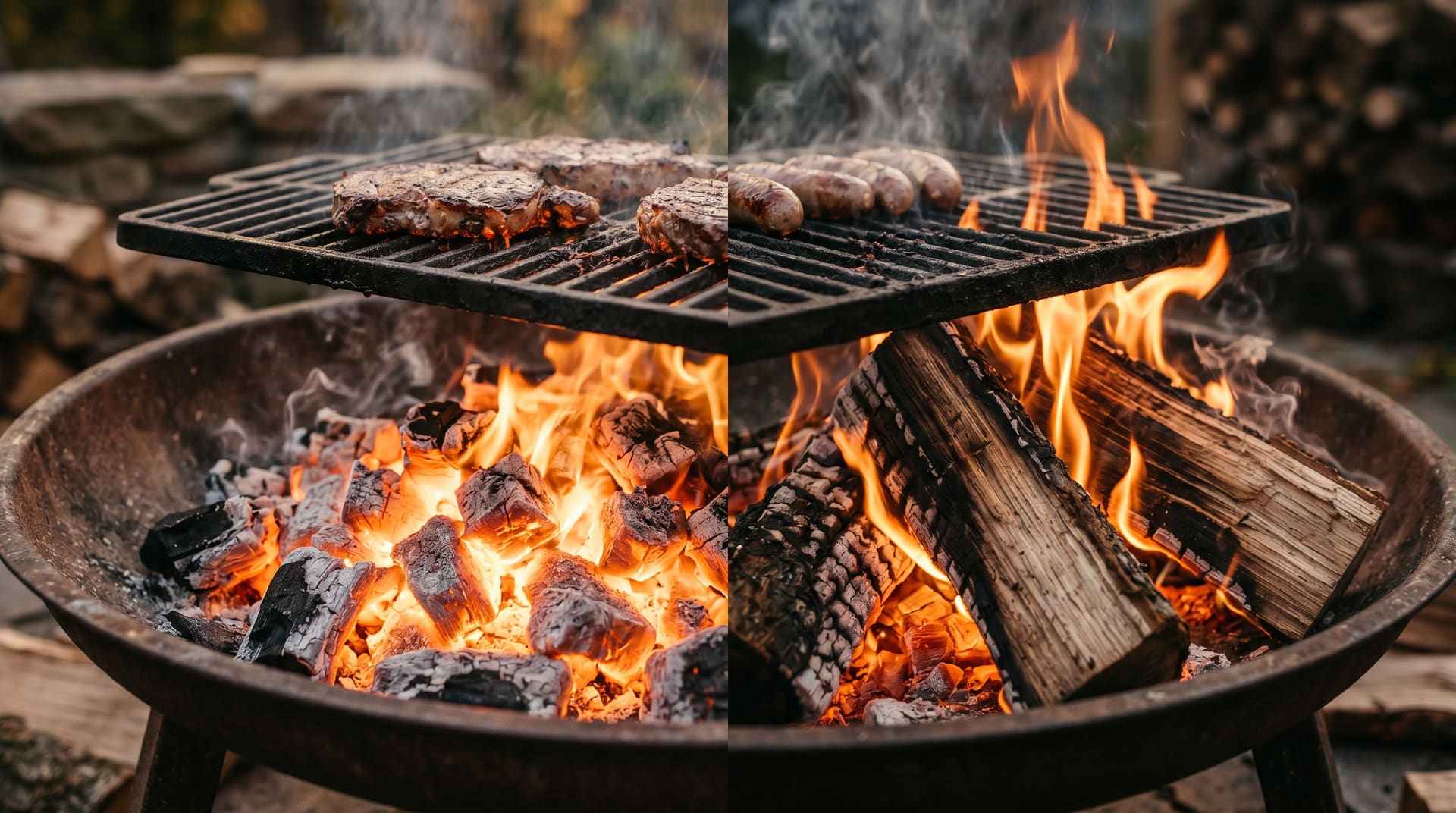
Two zones, as always. Chicken skin is full of fat and that fat will drip and flare. If the bird is sitting over direct flame when that happens, you get soot and bitterness rather than smoke and colour.
Burn your fire down to embers, rake most of them to one side, and leave a thin scattering at the other. You want the cooking area running at roughly 180-200C.
Chicken is the one meat where you do not gamble on temperature. Probe the thickest part of the thigh, avoiding the bone: you want 74C. The breast will read a little higher, around 70-72C, and with a brined bird that is fine.
Rest it for ten minutes before you cut it. Carve into eight pieces, or just tear it apart and put it on the table.
Everyone starts the bird skin down over the hottest part of the fire because they want that colour immediately. Then the fat renders straight into the flames, the flames come back up, and in three minutes the skin is black and the meat is raw. Start it gently. The colour comes at the end, in ninety seconds, when everything else is already done.
- Cai
A brined chicken over hardwood does not need much. Three things I come back to:
Avoid sugary marinades and shop-bought barbecue sauces at the start of the cook. They burn long before the chicken is done. If you want a glaze, brush it on in the last five minutes.
Spatchcocking works on anything with a backbone and two legs. Poussin takes about twenty minutes. Guinea fowl behaves almost exactly like chicken but has more flavour and slightly less forgiving breast meat. Duck needs the fat rendering for longer and produces spectacular flare-ups, so keep it well away from direct heat.
Game birds - pheasant and partridge - respond well to the technique too, though they are much leaner and need careful watching. We covered those separately if you want the detail on cooking game birds over fire.

Our hands-on workshops cover fire building, two-zone heat control, butchery and cooking everything from birds to whole animals.
View Workshop DatesSpatchcock it, brine it, start it gently skin side down, and take it to 74C in the thigh. That is the whole method, and it will give you a better chicken than your oven has ever produced.
- Cai