Recipes
Beef is the protein people are least afraid of and most likely to ruin. Everyone has cooked a steak. Almost nobody has cooked one over a real fire, and the two are not the same job.
A gas barbecue gives you a dial. A fire gives you a moving target: a bed of embers that is furnace-hot at one end and gentle at the other, changing every fifteen minutes as it burns down. Once you stop fighting that and start using it, fire will cook beef better than any kitchen appliance you own. The crust is deeper, the smoke is real, and the meat tastes of something.
This is how I do it, at events and at home.
The single biggest factor in whether fire-cooked beef works is thickness. A thin supermarket sirloin is a lost cause over embers - by the time you have any colour on the outside, the middle is grey. Ask your butcher to cut thick.
One general rule that has never let me down: the harder a muscle worked while the animal was alive, the longer and slower you cook it. Rump and shin walked. Fillet did not.
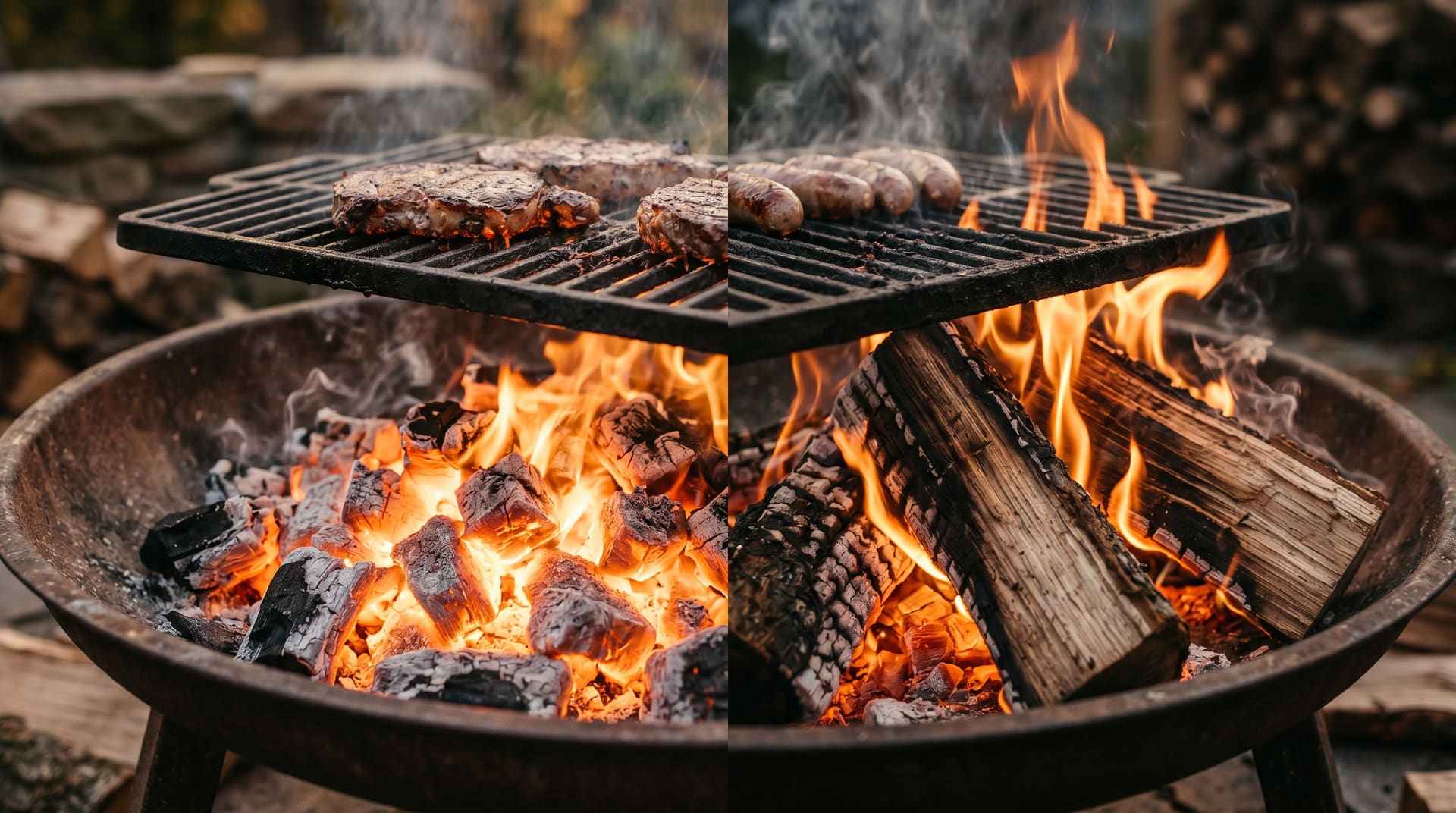
You are not cooking over flames. You are cooking over embers. Flames deposit soot and taste acrid; embers give clean, even radiant heat. Light your fire and then wait, usually forty minutes to an hour, until the flames have dropped and you have a glowing bed with a dusting of white ash.
Then build two zones. Rake two thirds of the embers to one side for direct, savage heat, and leave a thin layer at the other end for gentle indirect cooking. Every technique below is just a matter of moving meat between those two zones.
To check the heat without a thermometer, hold your hand about 12cm above the grill. If you can keep it there for two seconds, that is your searing zone. Five or six seconds is your gentle zone. It sounds crude and it is remarkably accurate.
On wood: oak, beech and ash all burn down to good, long-lasting embers. Fruit woods are sweeter and better with pork and poultry. Never cook over softwood, treated timber or pallet wood - resinous smoke tastes foul and the treatment chemicals are not something you want near food.
For any thick steak or joint, this is the method I reach for nine times out of ten. It is close to foolproof and gives you edge-to-edge pink instead of a grey band under the crust.
Target internal temperatures, pulled from the fire and allowing for carryover:
The most common thing I see is people searing first and then trying to bring the middle up. It works, but it gives you a thick grey ring of overcooked meat under the crust. Turn the order around and that ring disappears. Same fire, same steak, better result.
- Cai
Beef short rib is the cut I would cook if I could only cook one. It has fat, bone, connective tissue and enormous flavour, and fire suits it perfectly.
A three-bone fore rib feeds six to eight people and looks extraordinary coming off a fire. Same reverse-sear logic, larger scale.
Salt it the night before. Bring it up slowly in the indirect zone until the centre reads 48C, which usually takes around two hours for a three-bone joint. Then sear the whole outside over the hot embers, turning every minute or so until it is properly browned all over. Rest for a full twenty-five minutes before carving. Carve along the bone first to release the joint, then across into thick slices.
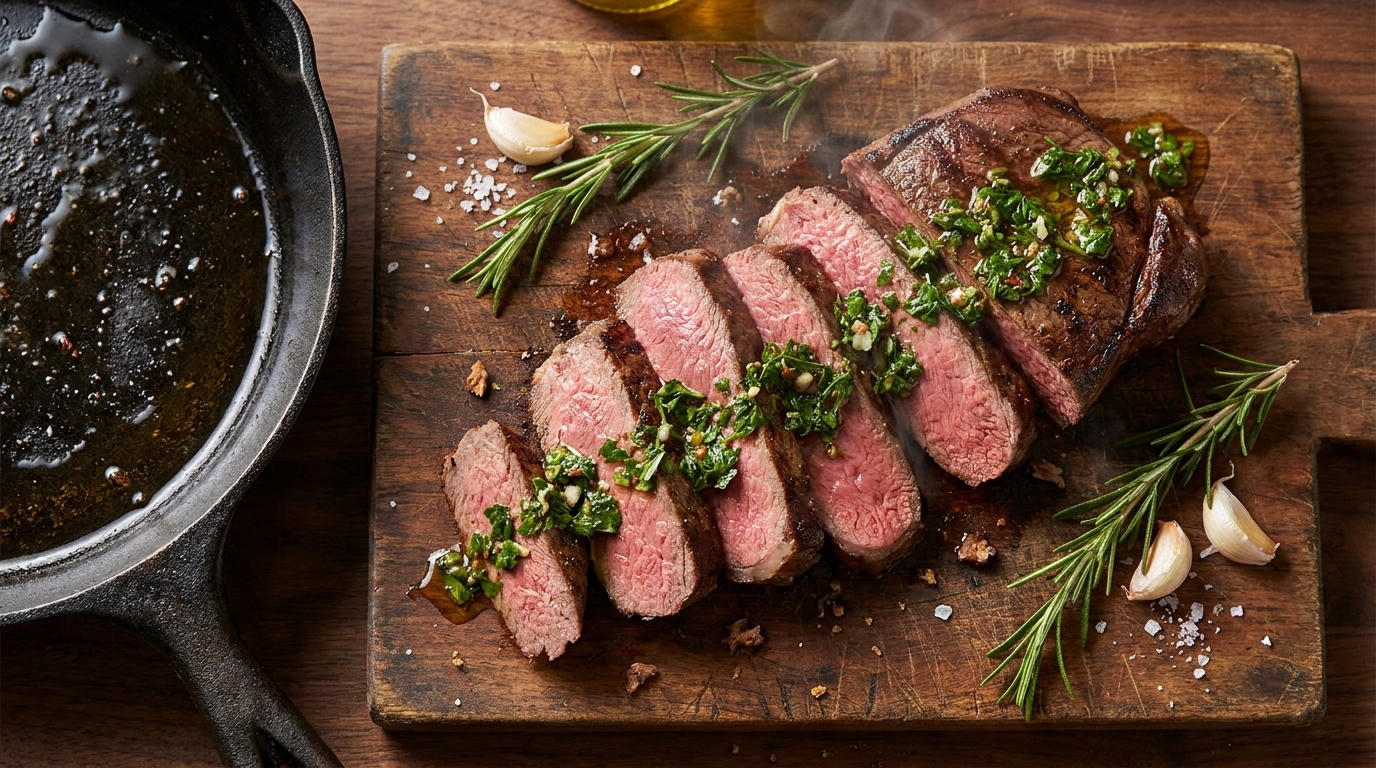
Serve it with something sharp to cut the richness. Chimichurri, salsa verde, horseradish, or just a pile of watercress and good mustard.
Fire is unforgiving of poor meat because there is nowhere to hide - no sauce, no long braise, just heat and salt. It is worth buying well.
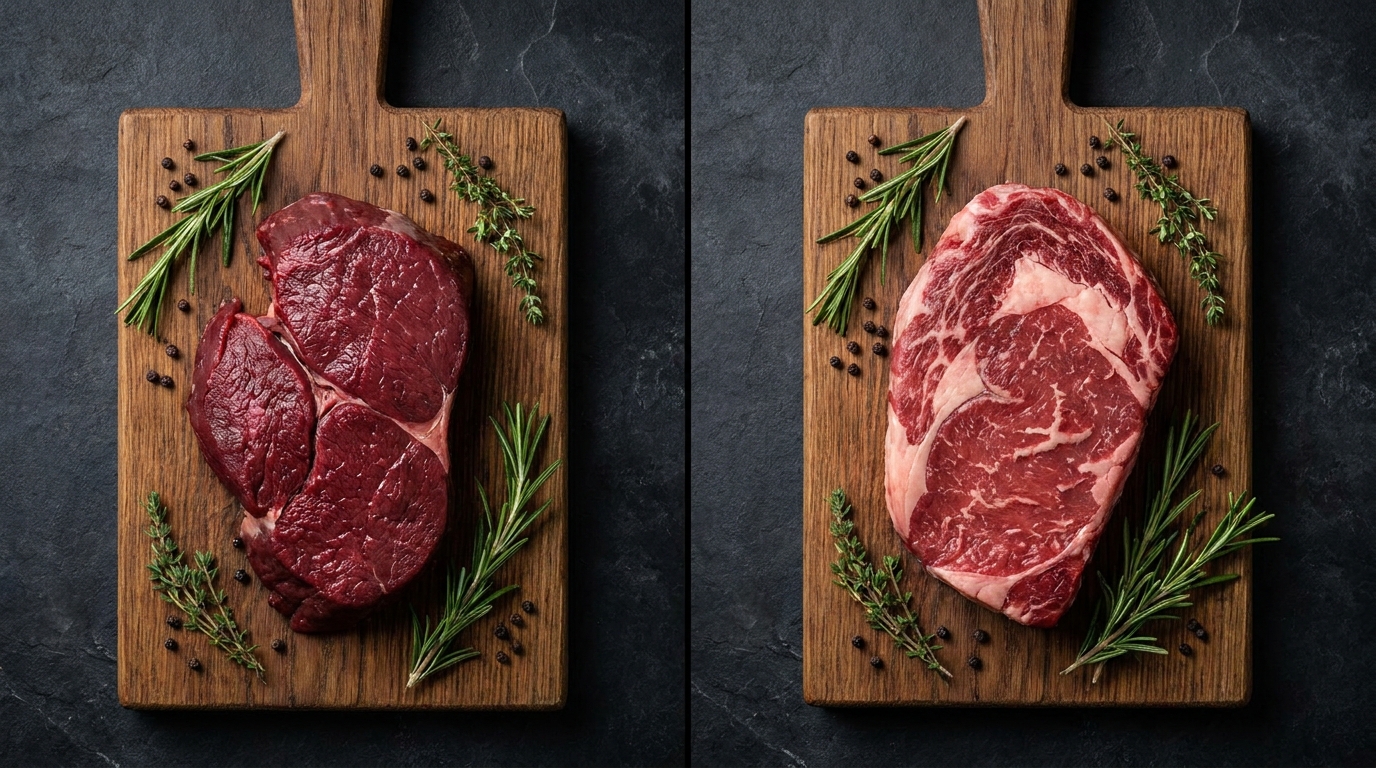
Go to a proper butcher and ask two questions: how long has it been hung, and where is it from. Dry-aged for at least twenty-eight days makes a real difference to both flavour and texture. Native breeds - Sussex, Hereford, Dexter, Longhorn - tend to carry more intramuscular fat than continental crosses bred for lean yield, and that fat is where the flavour lives.
Grass-fed beef from a farm you can name will nearly always beat a supermarket steak of the same nominal cut, and a thick bavette from a good butcher costs less than a thin sirloin from a supermarket while tasting considerably better.
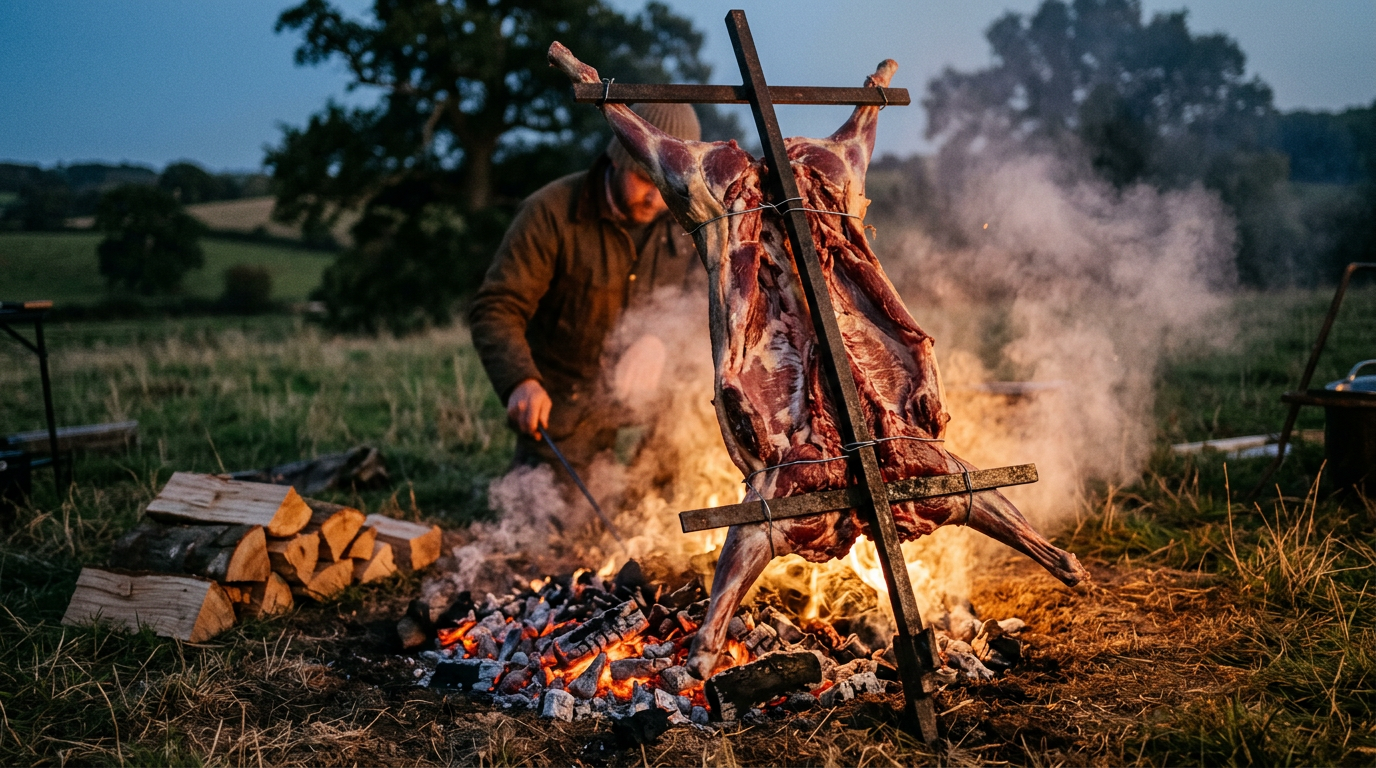
Whole ribs of beef, asado crosses and live-fire feasting menus for weddings, parties and corporate events across the UK.
Check Your DateBeef over fire is not complicated. Buy it thick, salt it early, cook it gently and finish it hard, and rest it longer than feels reasonable. Do that and you will produce something a kitchen cooker cannot match, because no oven on earth gives you the radiant heat of a hardwood ember bed.
- Cai