Recipes
Ribs have a reputation for being difficult, and the reason is that almost everything written about them is American. Those guides assume an offset smoker, a bag of hickory chunks, and an afternoon that is not going to suddenly rain sideways.
I cook outdoors for a living in the south of England. I have cooked ribs in July sun and in February drizzle, and the honest truth is that the kit matters far less than people claim. You need a heat source you can keep low, somewhere to put smoke, and patience. That is it.
Buy from a butcher rather than a supermarket if you can. Supermarket racks are often trimmed so hard there is barely any meat between the bones, and they are frequently sold pre-marinated in something sweet that burns.
Turn the rack bone side up. There is a thin, shiny membrane across the bones called the silverskin. It does not render, it does not take smoke, and it turns to something like plastic film as it cooks.
Slide a butter knife under it at one end, get a grip with a piece of kitchen paper, and pull it off in one sheet. It takes twenty seconds and it is the difference between good ribs and ribs where every mouthful has a papery layer on the back. Do not skip this.
Commercial rubs are mostly sugar and salt with paprika for colour. You can do better with what is already in your cupboard:
Pat the rack dry, coat both sides, and leave it in the fridge uncovered for a few hours or overnight. The sugar is there to help the bark form and caramelise - keep it in proportion, because too much and it burns before the meat is done.
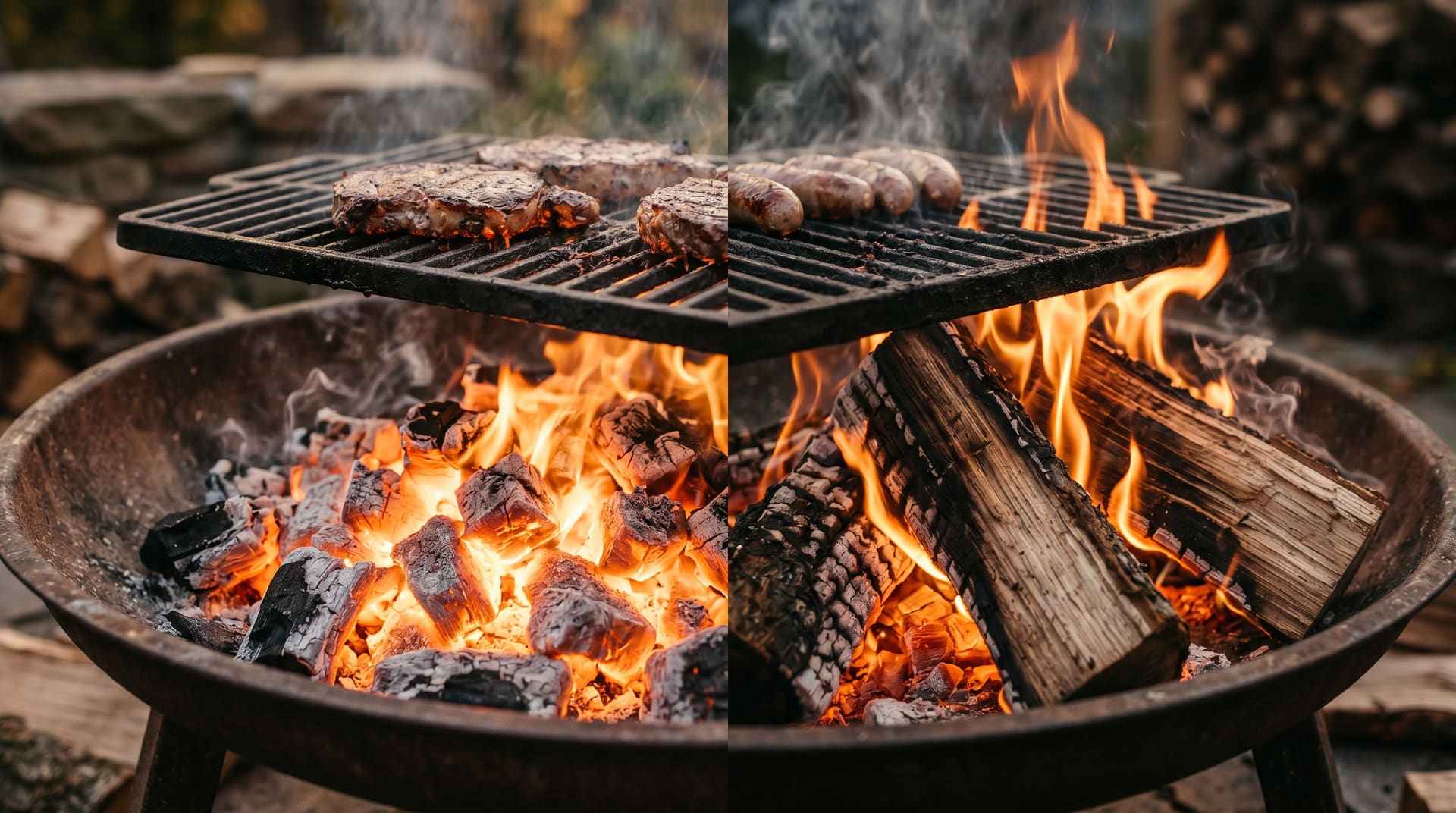
My preference, and no special equipment needed. Build your fire at one end of the grill and put the ribs at the other, bone side down, as far from the heat as you can get them. You are aiming for 110-130C in the cooking area.
A standard kettle is a perfectly good smoker if you set it up as one. Bank all the coals against one side, put a foil tray of water on the empty side, and sit the ribs above the tray. Lid on, bottom vent half open, top vent a quarter open and positioned over the meat so smoke draws across it.
Add a couple of wood chunks - not chips, which burn out in minutes - directly onto the coals. Apple, cherry and beech all suit pork. Top up with eight to ten fresh briquettes every hour or so. Everything else is the same as above.
It rains here. Sometimes you want ribs anyway. An oven will get you eighty per cent of the way there and there is no shame in it.
Rub the rack, wrap it tightly in foil, and put it on a tray at 140C for three hours. Then unwrap, brush with glaze, and finish under a hot grill for five to eight minutes until it bubbles and chars at the edges.
You will not get real smoke, and no amount of liquid smoke fixes that convincingly. What you will get is tender, well-seasoned, properly cooked ribs. If you want a hint of the real thing, finish them over embers for ten minutes once the weather clears.
Forget the phrase "fall off the bone." That is overcooked. A properly cooked rib holds together when you pick it up and releases cleanly when you bite. If the meat is sliding off on its own it has gone past the point where it had any texture left.
- Cai
Not by time, and not really by temperature either. Two tests:
If you want a number, the meat between the bones will usually be somewhere around 90-95C, but the feel tests are more reliable because ribs vary so much.
If you are saucing, do it in the last fifteen minutes and no earlier. Sugar burns. Brush thinly, let it set, brush again.
Honestly though, ribs that have been properly seasoned, smoked and cooked do not need it. I serve them dry with sauce on the side and most people never reach for it. If the ribs only work with sauce on them, the sauce is covering for the cook.

Our fire cooking workshops cover heat management, smoke and low-and-slow technique, hands on, with the fire in front of you.
View Workshop DatesRibs are not hard. They are just long. Pull the membrane, keep the heat low, put smoke on early, wrap when the colour is right, and judge them by feel instead of the clock. You do not need a smoker and you certainly do not need good weather.
- Cai