If I had to pick one animal that suits live fire best, it would be lamb. Not venison, which I cook more of, and not beef. Lamb.
The reason is fat. Lamb fat sits in seams and under the skin, and when it renders it drips into the embers, flares, and comes straight back up as smoke that seasons the meat. Beef fat does this too but lamb fat carries more flavour with it. Cook a lamb shoulder over wood and you get something that tastes of the fire itself.
It is also the meat most people are nervous about, usually because of one bad experience with a grey, greasy leg from a Sunday roast. That is a cooking problem, not a lamb problem.
Which Cut, and Why
- Leg, butterflied: My favourite thing to cook for a crowd. Boned out and opened flat, it goes from raw to carved in about forty minutes and feeds eight to ten. Uneven thickness is a feature, not a fault - you get rare and well-done from the same piece, so everyone gets what they want
- Shoulder, whole and bone-in: Fattier, tougher, and far more flavourful than leg. Needs four to five hours, and rewards you with meat you can pull apart with tongs
- Rack and cutlets: Fast, elegant, expensive. Straight over hot embers, fat side first. Four minutes a side and done
- Chops (loin and chump): Underrated. Thick chump chops especially. Render the fat edge first, then cook flat
- Breast and belly: Cheap, very fatty, absolutely delicious cooked slowly and then crisped hard at the end
- Whole lamb: The centrepiece. Six to eight hours on a cross beside the fire. A commitment, and worth it
Hogget and mutton, from older animals, are worth seeking out if you can find them. Stronger flavour, more fat, cheaper, and they take low and slow cooking beautifully.
Butterflied Leg of Lamb
This is the one to learn. Ask your butcher to bone and butterfly a leg for you - it takes them two minutes and most will do it without charging.
- Marinate it, and give it time. Olive oil, a lot of garlic, rosemary, lemon zest, salt. Four hours minimum, overnight is better. Lamb is one of the few meats where marinades genuinely penetrate, because the open butterflied surface gives them a way in
- Take it out of the fridge an hour before. A butterflied leg is thick in places and cold spots will still be raw when the thin edges are done
- Start fat side down over medium heat, not the hottest part. Lamb fat renders fast and you will get flare-ups. Let them happen, but move the meat if a flame parks itself in one place
- Turn every four or five minutes, moving between the hot and gentle zones as it colours. Total time is usually thirty to forty minutes
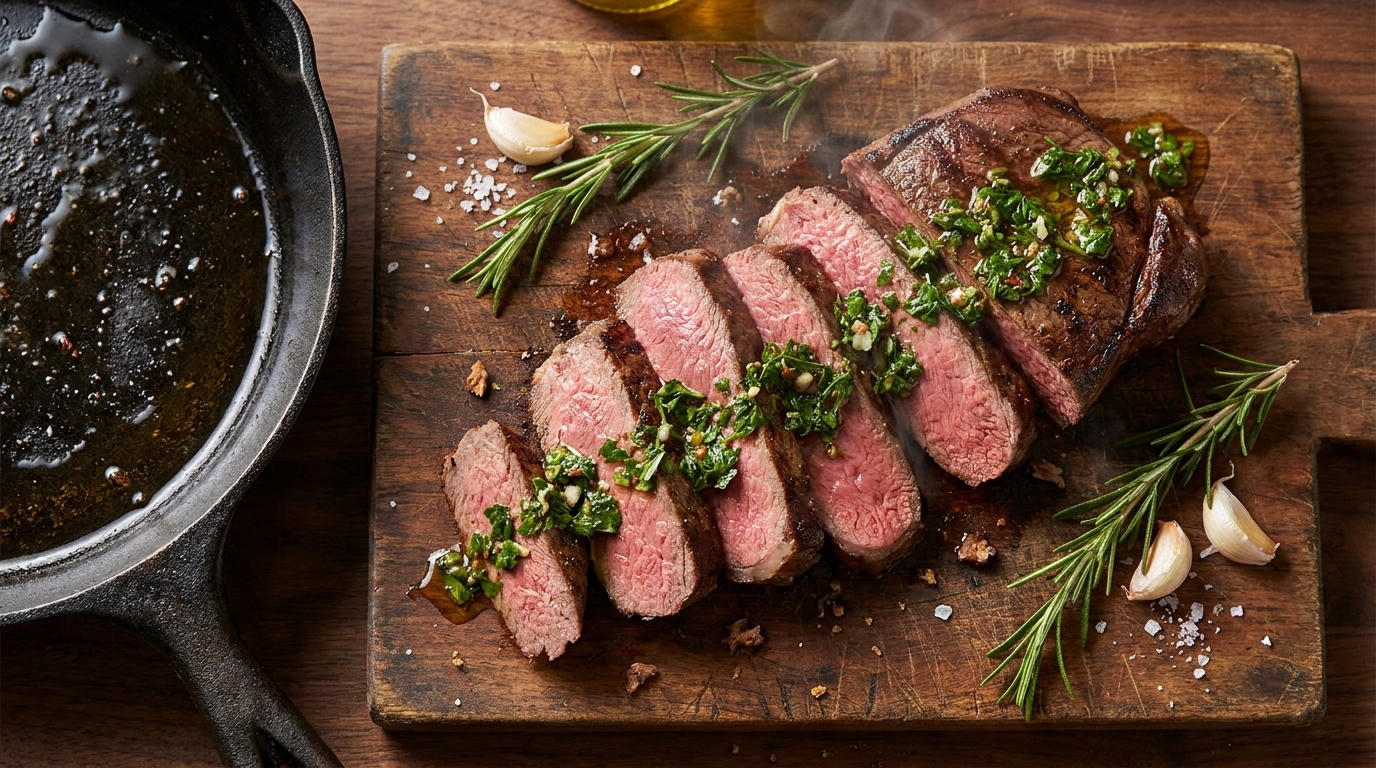
- Pull at 52C in the thickest part for medium-rare there, which means the thinner sections will be nearer medium. That range is the point
- Rest fifteen minutes, then carve across the grain in thick slices
Serve it with something acidic. Salsa verde, a sharp yoghurt with mint and lemon, or pickled red onion. Lamb is rich and it needs a counterweight.
Slow-Cooked Shoulder
A whole bone-in shoulder is the most forgiving thing on this list. It is almost impossible to overcook because the fat keeps basting it.
- Score the fat in a diamond pattern, not deep enough to reach the meat. Rub salt, pepper and chopped rosemary into the cuts
- Set up for indirect heat at roughly 130-150C, fire well to one side, shoulder well away from it
- Cook for four to five hours, fat side up throughout so it renders down through the meat. Add a log every thirty to forty minutes to hold the temperature
- It is ready at around 92-95C internal, when the blade bone wiggles free with almost no effort
- Move it over the hot embers for the last five minutes to crisp the fat cap properly
- Rest for thirty minutes, then pull it apart with two forks or a pair of tongs
This is the dish I would cook for people who think they do not like lamb. It converts them.
People are scared of lamb fat and they trim it off. Do not. That fat is the entire reason lamb works over fire - it renders down, drips into the embers and comes back as smoke. Trim it away and you are cooking a lean joint over a bare fire, which is exactly the dry, disappointing thing you were trying to avoid.
- Cai
Whole Lamb on the Cross
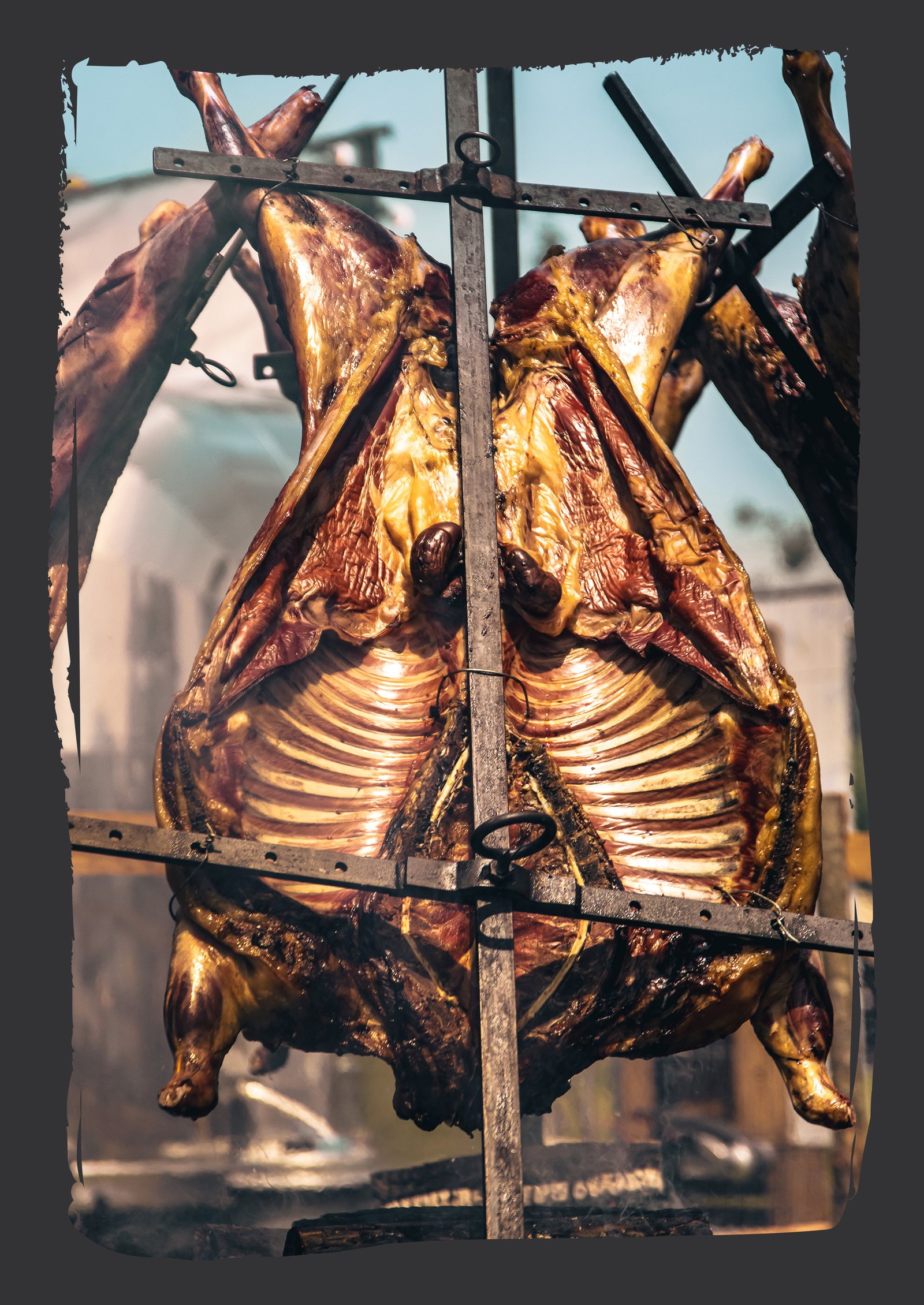
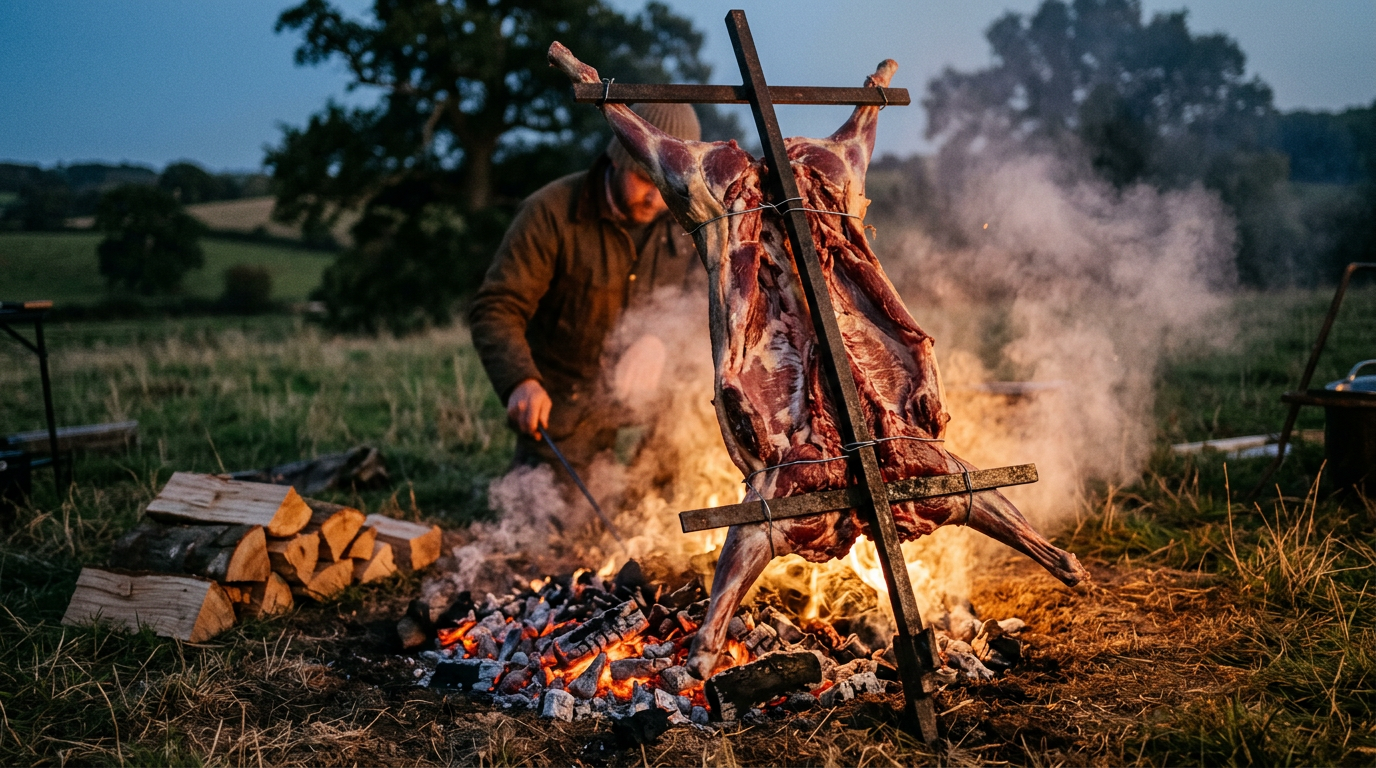
This is the Argentine asado technique and it is the most theatrical thing we do. A whole lamb is splayed on an iron cross, staked into the ground at an angle beside a fire, and cooked by radiant heat alone for six to eight hours.
A few things people always want to know:
- The lamb never sits over the fire. It stands beside it. The fire is a heat source, not something you cook on top of
- Ribs face the fire first, for roughly two thirds of the total time. The ribcage protects the meat while the fat renders through
- You turn it once, flipping the cross to finish skin side to the fire and crisp it
- The cross is moved constantly. Closer, further, angled - you are managing heat by distance rather than by dial, all day
- A 15kg lamb feeds around thirty to thirty-five people as the main event
It is not a technique for a first attempt in a back garden, but if you have the space, the time and a source of good lamb, it is one of the great cooking experiences. We wrote about the full asado method separately if you want the detail.
Buying Lamb
British lamb is genuinely world-class and it is seasonal in a way most meat no longer is. New season lamb arrives in spring, light and delicate. By late summer and autumn the animals are bigger and the flavour is deeper, which is when I like it most.
Salt marsh lamb, from sheep grazed on coastal marshes, has a distinctive savoury quality that is worth the premium at least once. Romney, Herdwick and Welsh Mountain all have real character. And ask your butcher for hogget in autumn and winter - it is lamb that has seen a second summer, and it is better meat than most people ever get to taste.
Whole Lamb on the Cross
The asado cross is the centrepiece of our feasting menus - a whole animal, cooked beside the fire in front of your guests all afternoon.
See Our Menus
Lamb rewards confidence. Leave the fat on, cook it beside the fire rather than on top of it, and either go fast and hot or slow and patient - the middle ground is where lamb goes grey and greasy. Get that right and it is the best thing you can put over wood.
- Cai
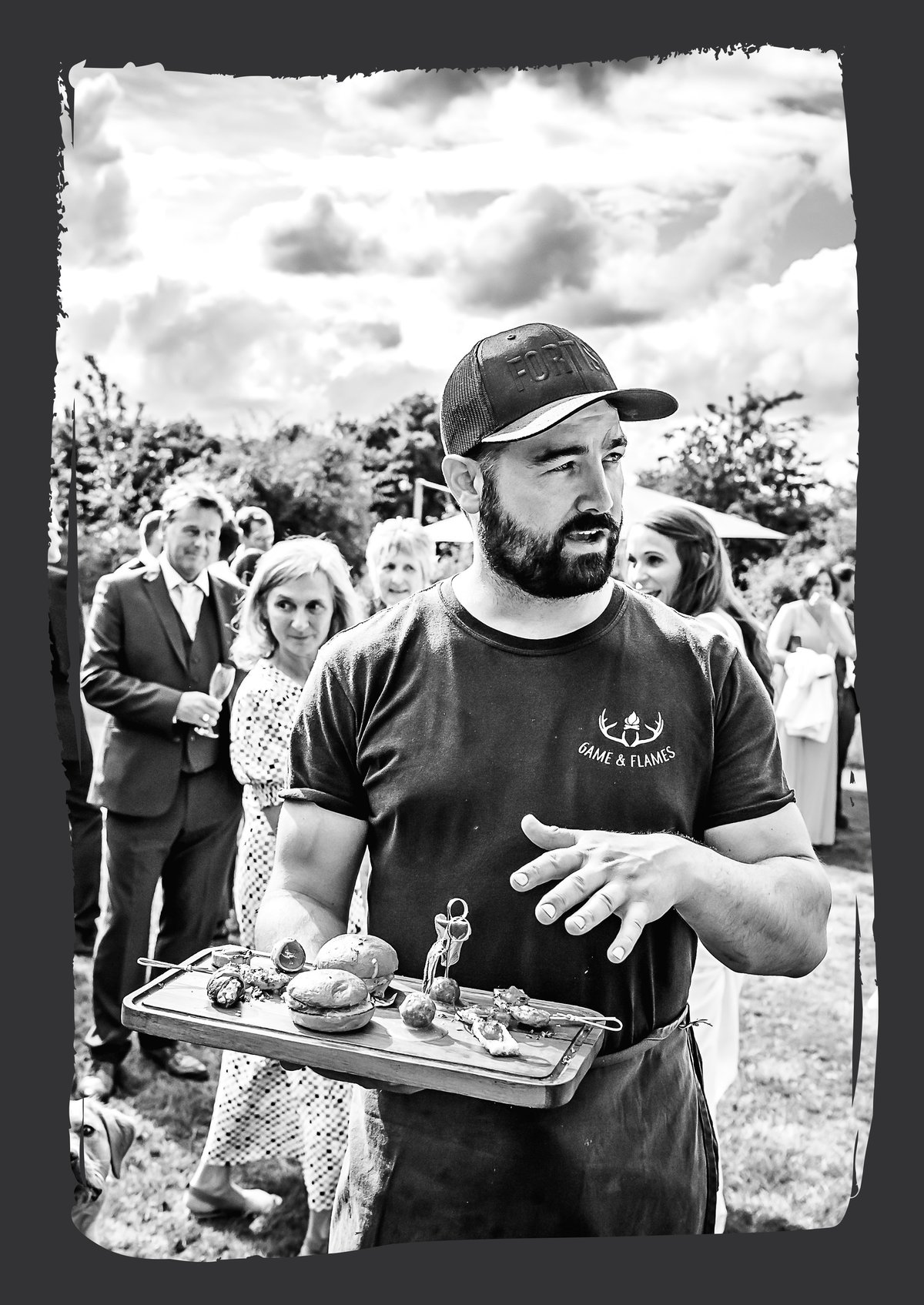
Founder & Head Chef
Cai Ap Bryn
Eat Game Awards 2024 and 2025 Winner, PDS 1 & 2 qualified deer stalker, and the fire behind Game and Flames. Cai has been cooking wild game over open flames since 2016, catering weddings, events, and festivals across the UK.