Corporate
I have been on the other side of a team building day. A hotel conference room, a facilitator with a flip chart, an exercise involving spaghetti and marshmallows. I understand why people go quiet when the email arrives.
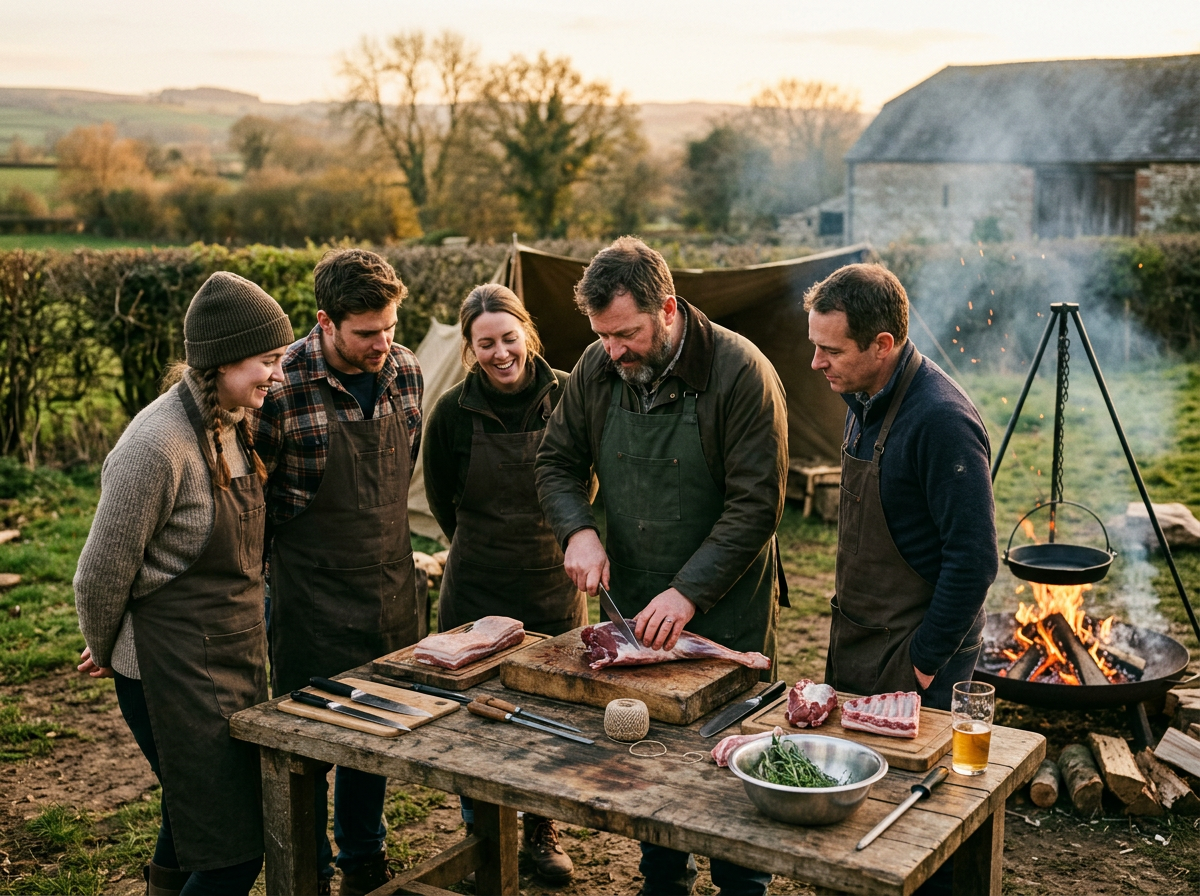
What we do is different, and the difference is simple: everyone is cooking their own lunch over a real fire, with a chef who does this for a living, and at the end of it they sit down together and eat it. Nobody has to pretend to enjoy it. They just do.
This is how the day runs.
The team arrives to a cold fire pit and a pile of wood, and the first job is to get it going. Not with firelighters. With kindling, a bit of technique and some patience. It is a good first task because it needs a few people, it has an obvious result, and everyone is a bit rubbish at it to begin with.
While the fire burns down to embers, I talk about what we are cooking and why fire is different from a kitchen. This takes fifteen minutes and is the only bit that resembles a talk.
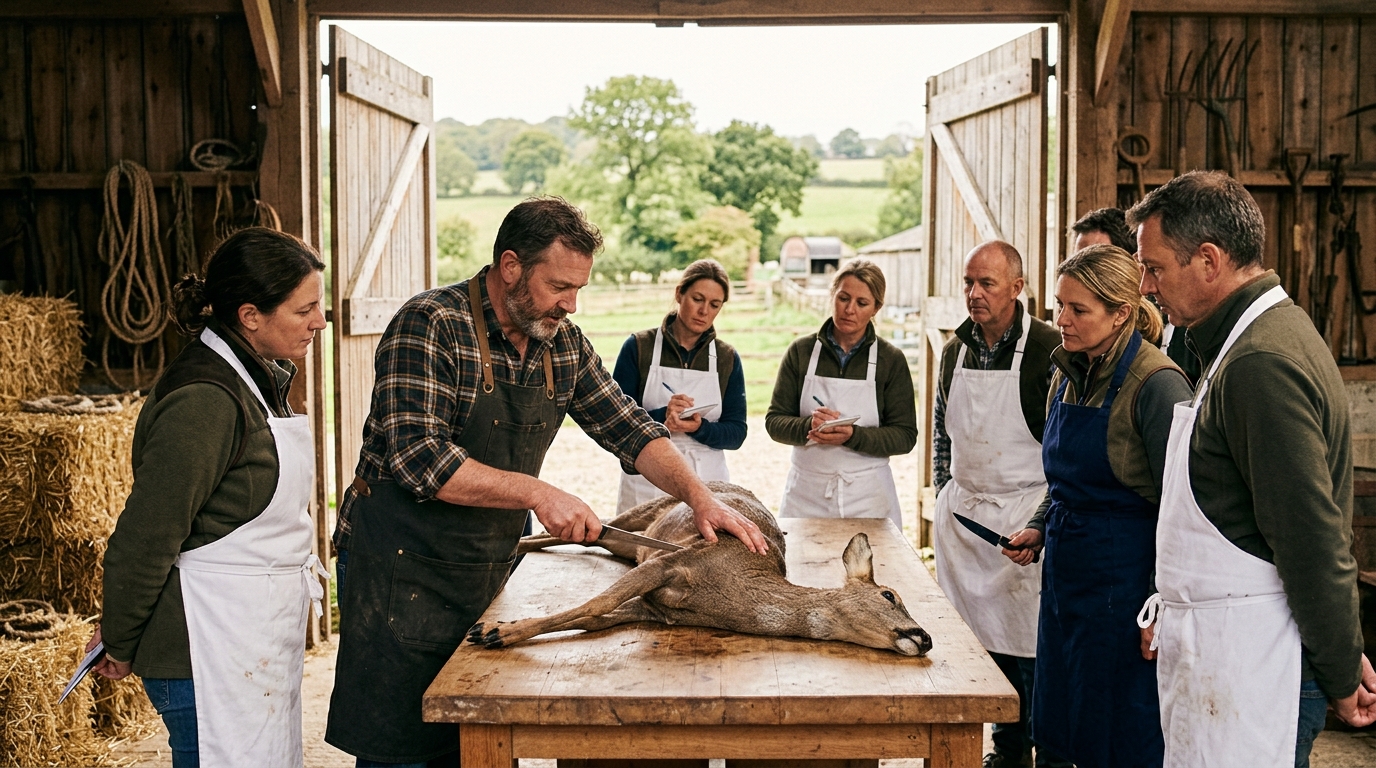
Then the team is split. Not into competing groups, which turns into the loud people winning, but into stations, each with a real job that has to be done for lunch to happen.
People rotate. Everyone ends up having done a bit of everything, and by one o'clock the group has collectively cooked a feast that none of them could have done alone. That last part is the bit the HR team likes.
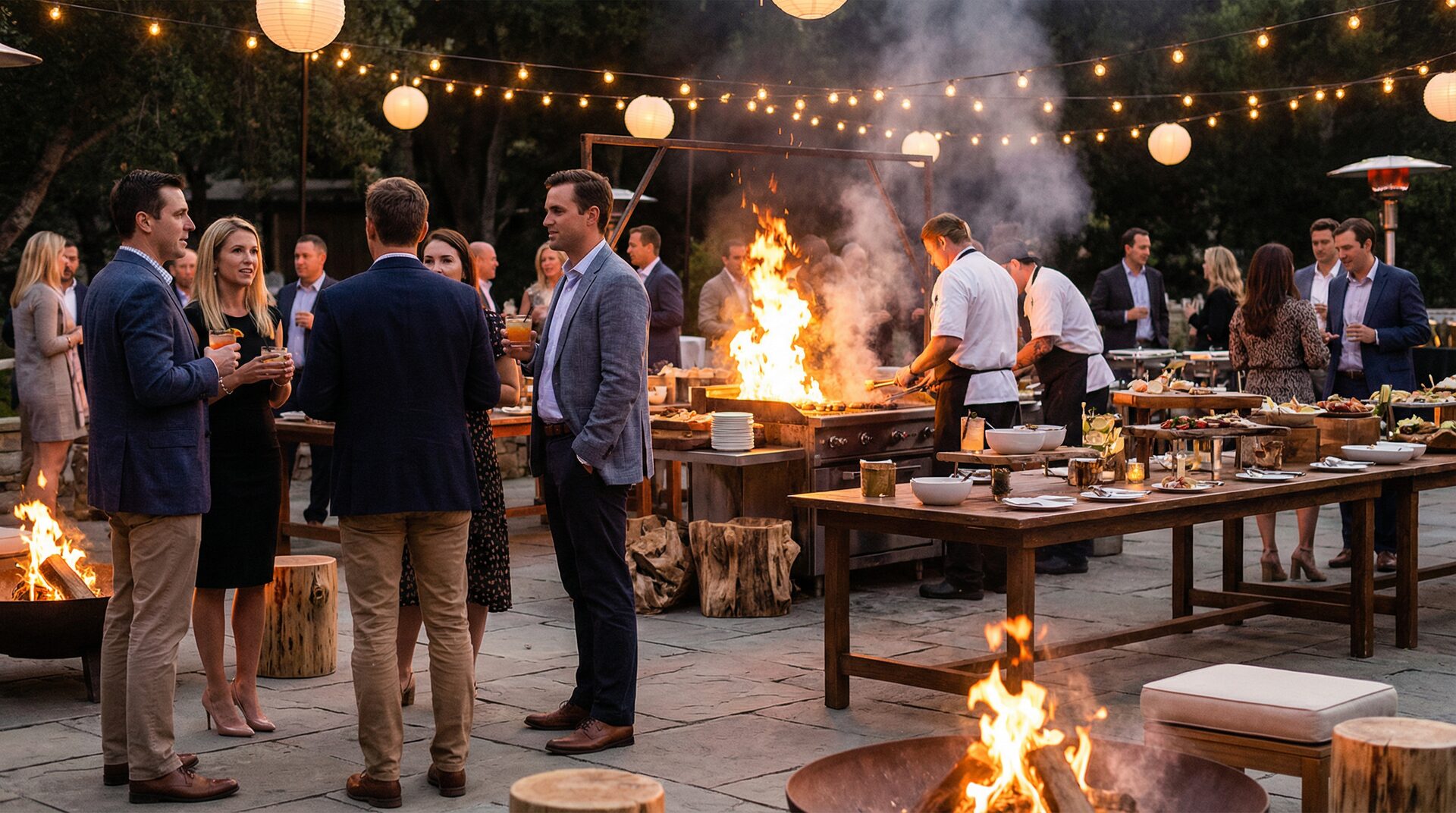
Everything comes off the fire at once, onto boards, onto a long table, and the team sits down to it. This is the part I care about most. A group that has spent three hours cooking together eats differently from a group that has been served. They talk about what they made. They argue about whose station did the best job. They stay at the table.
I have never once had to encourage a team to mix at lunch on one of these days. By the time the food comes off the fire, the mixing has already happened. It happened at the grill at eleven when the finance director was being shown how to flip a flatbread by the intern.
- Cai
The evidence on team building points the same way every year: hands-on, low-pressure activities beat passive or competitive ones for how people feel afterwards. Cooking scores high because it is social without being a contest, everyone can do it at some level, and there is a result you can eat.
Fire adds something the cookery school version does not. It is outdoors, it is a bit primal, and there is a real element of risk and skill. People who would roll their eyes at a pasta-making class will stand at a fire for three hours turning a lamb and talk about it for a week.
If you are planning an away day and want something people will not dread, have a look at what we do for companies, or tell me about your team and I will put together a day for them.